The 1955 Exhibition

Opening
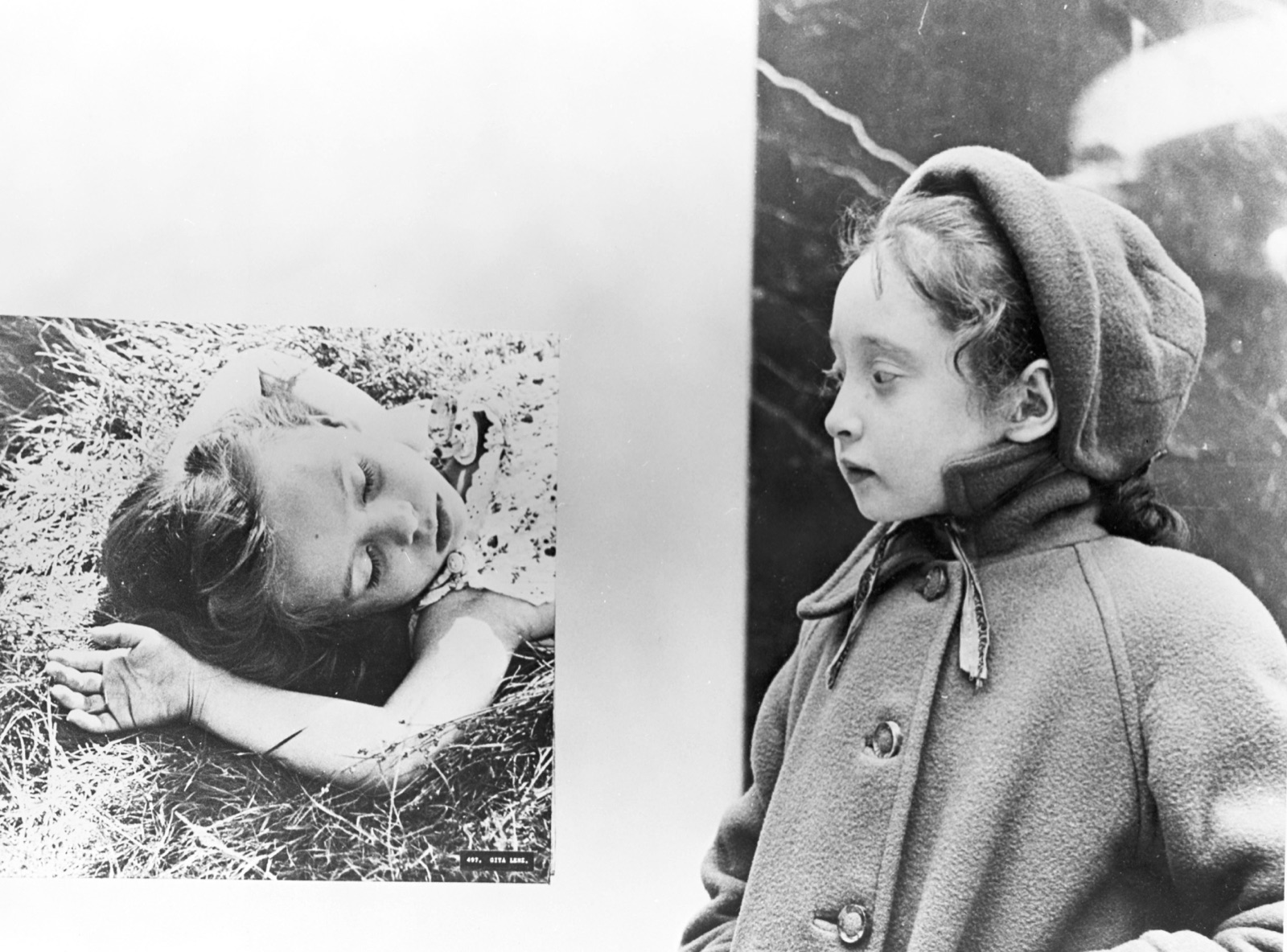
The Family of Man opened at the Museum of Modern Art in New York on 24 January 1955 and ran through 8 May 1955.1 It assembled 503 photographs by 273 photographers from 68 countries.1 In the New York run alone the show drew more than 270,000 visitors.1
The curatorial pair
The exhibition was curated by Edward Steichen, then Director of MoMA’s Department of Photography, assisted by Wayne Miller.1 For Steichen’s life — birth in Bivange, the Naval Aviation Photographic Unit, the 1963 White House meeting with Grand Duchess Charlotte — see the Steichen memorial. Miller’s own contributions to the exhibition are catalogued under his photographer page; his plates appear at checklist numbers #22, #29, #42, #43, #44, #47 in the early Prologue–Lovers–Marriage flow, plus four more across later sections.

Steichen’s statement
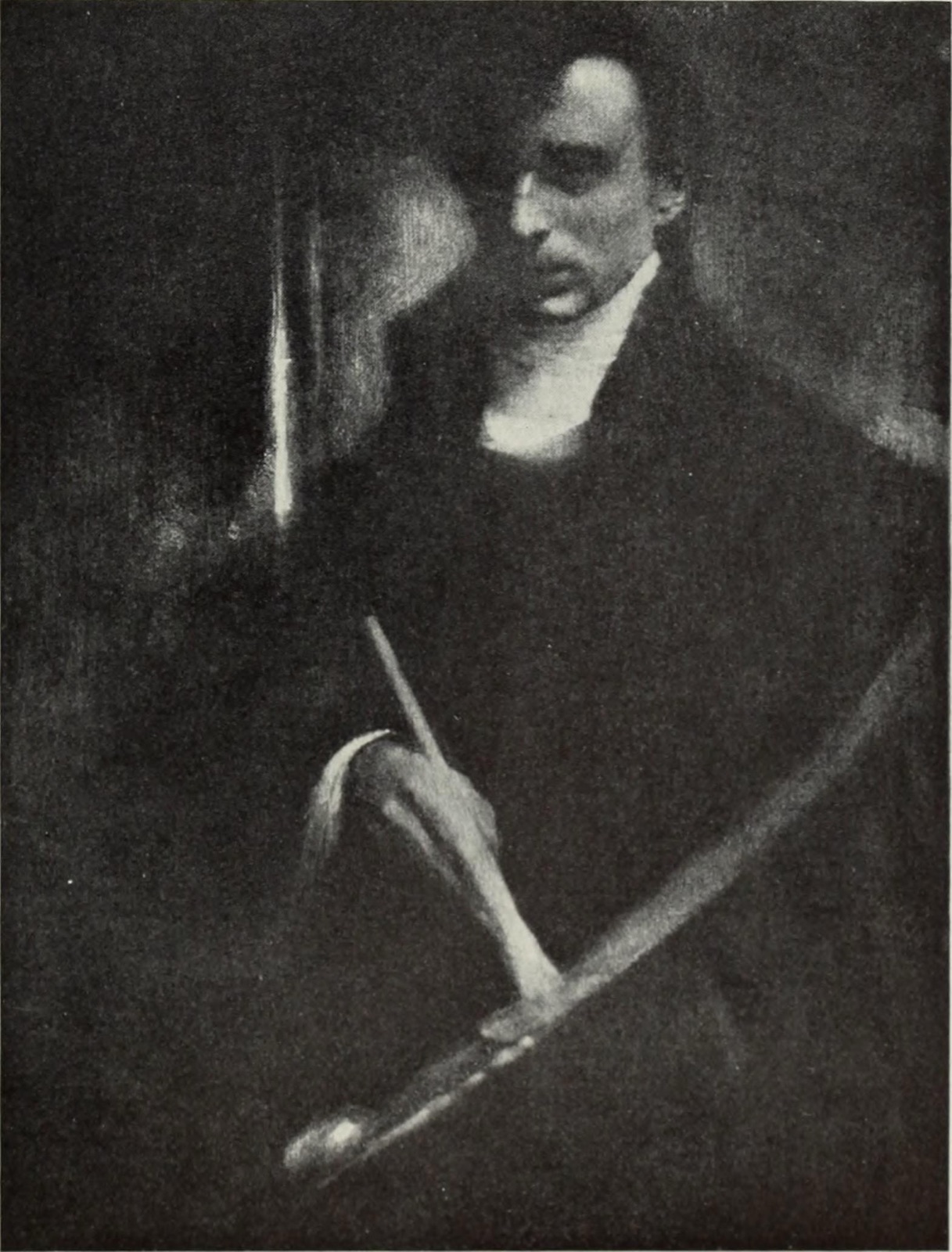
In his catalog introduction Steichen wrote:
“The exhibition, now permanently presented on the pages of this book, demonstrates that the art of photography is a dynamic process of giving form to ideas and of explaining man to man. It was conceived as a mirror of the universal elements and emotions in the everydayness of life — as a mirror of the essential oneness of mankind throughout the world.”2
The MoMA archives record one further sentence Steichen reportedly used about the show:
“The people in the audience looked at the pictures, and the people in the pictures looked back at them. They recognized each other.”1
This thesis — universal-as-natural — is the same one Roland Barthes would interrogate two years later in Mythologies. See Reception for the full critical thread.
Paul Rudolph’s installation
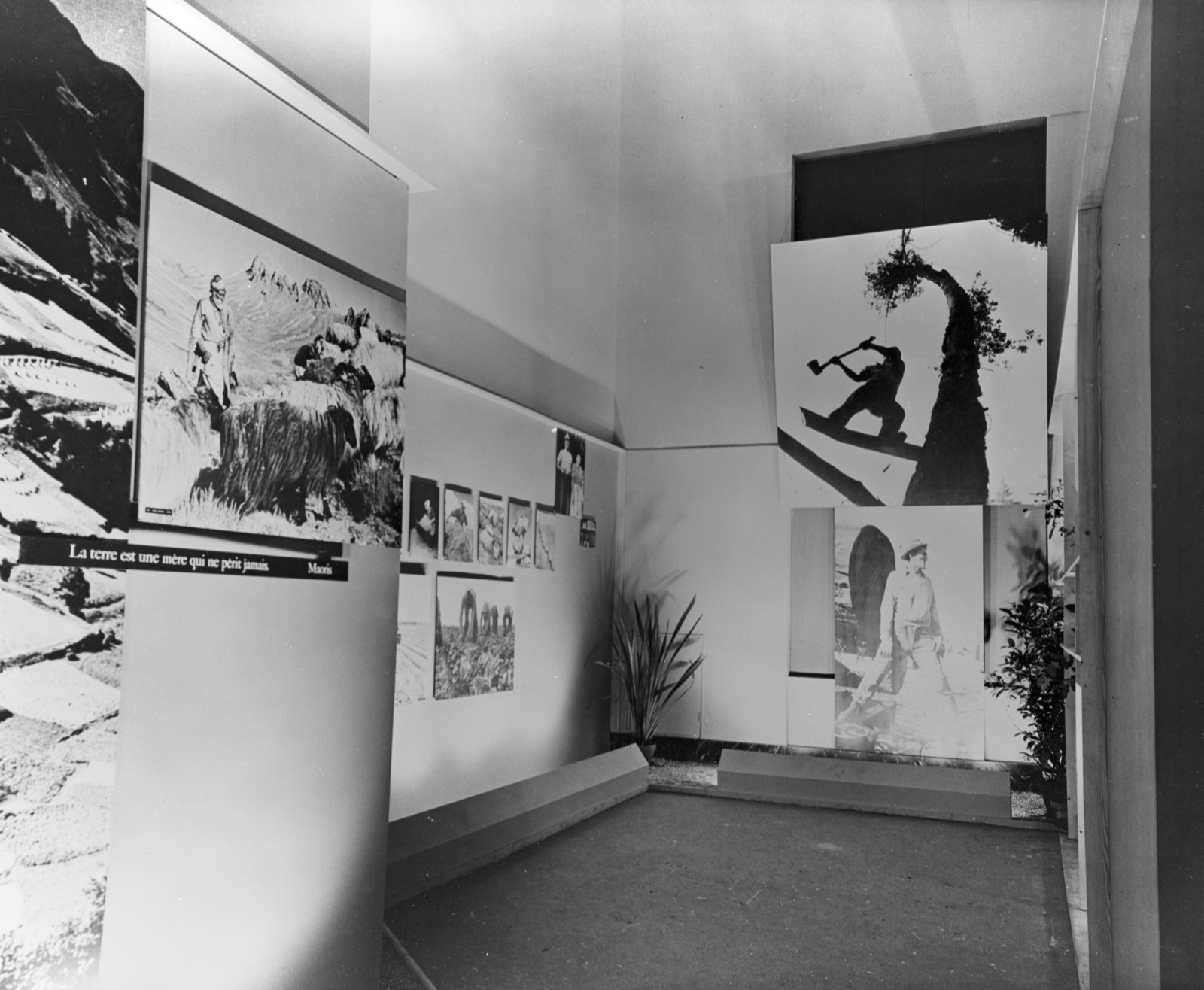
The architect Paul Rudolph designed the gallery installation. Per the MoMA archive record, he used temporary walls and print sizes ranging from 24 × 36 cm to 300 × 400 cm.1 Rudolph would later chair Yale University’s Department of Architecture from 1958 to 1965;3 The Family of Man sits early in his trajectory, before the work that would define his late-modernist reputation.

The catalog
Two simultaneous editions of the catalog were published on 21 June 1955:2
- A deluxe edition, “published by Simon and Schuster in collaboration with Maco Magazine Corporation for the Museum of Modern Art, New York”: “boards, boxed, 226 pages, more than 500 photographs from 68 countries, including portfolio of installation pictures of the exhibition ‘The Family of Man’ in the Museum of Modern Art, New York. Prologue by Carl Sandburg, introduction by Edward Steichen. 8½ × 11”. $10.”2
- A paper edition, “published by the Maco Magazine Corporation for the Museum of Modern Art”: “Stiff paper cover printed in four colors. More than 500 photographs from 68 countries. 192 pages. Prologue by Carl Sandburg, introduction by Edward Steichen 8½ × 11”. $1.”2
The layout for both editions was designed by Leo Lionni, “well-known art director and artist,” and printed by R.R. Donnelley and Sons.2 The wall captions — quotations from world literature placed throughout the exhibition’s interior — are reproduced in both books.2
Sandburg’s prologue
The exhibition’s prologue was written by the poet Carl Sandburg, Steichen’s brother-in-law (Sandburg married Steichen’s sister Lilian Steichen in 1908; see the Steichen memorial). The prologue text was distributed as a leaflet to every visitor of the New York run and reprinted in full in both editions of the catalog.2
The closing line, quoted in MoMA’s June 21 1955 press release for the book:
“A camera testament, a drama of the grand canyon of humanity, an epic woven of fun, mystery and holiness — here is the Family of Man.”2
The MoMA archive cites a further line from elsewhere in the prologue:
“The first cry of a baby in Chicago, or Zamboango, in Amsterdam or Rangoon, has the same pitch and key, each saying, ‘I am! I have come through! I belong! I am a member of the Family.’”1
The phrase “The Family of Man” itself comes from Sandburg’s 1944 poem The Long Shadow of Lincoln: A Litany; that attribution is carried in this wiki from research/sections.md, which cites the 1955 catalog and the press release as primary anchors. Those primary sources have not been re-fetched in this round.4
The arc of the show
The MoMA archives summarise the exhibition’s narrative flow as: entrance archway with crowd imagery → lovers → childbirth → household life → careers → death → H-bomb → children / new life, closing on W. Eugene Smith’s A Walk to Paradise Garden (1946).1 This is MoMA’s own parsing, not the catalog’s table of contents — UNESCO’s 2003 inscription parses the same flow as 32 themes, the CNA education portal as 37; this wiki’s working reconstruction groups the plates into eleven thematic clusters.
The 1955 catalog does not present a canonical numbered list of sections, and the photographs do not carry titles in the show. The plate-by-plate record — agency, nationality, country of subject, print dimensions — is the MoMA Master Checklist for Exhibition #569, the anchor source for the Photographs index.
After New York
The New York run closed on 8 May 1955.1 The exhibition’s first U.S. tour, on the schedule announced in MoMA’s June 1955 press release, ran through six American cities from June 1955 through November 1956 — Minneapolis, Dallas, Cleveland, Philadelphia, Baltimore, and Pittsburgh.2 In parallel, an international edition went to the United States Information Agency to begin the world tour that would last until 1962 — figures commonly cited as roughly 9 million visitors across 91 venues, pending verification against USIA records held at the U.S. National Archives (RG 306).5 See the World Tour.
After the tour concluded, the prints returned to Steichen’s birthplace — see Clervaux.
Reception
The exhibition has been one of the most intensely debated photographic shows of the twentieth century. Roland Barthes (1957) opens the modern critique; Eric Sandeen (1995) is the standard book-length historical study. The full critical thread is on the Reception page.
src-moma-archives-highlights-1955 or src-moma-1955-press-release-book.
-
MoMA Archives, Edward Steichen at The Family of Man, 1955 (Archives Highlights),
src-moma-archives-highlights-1955. Anchors: 24 January – 8 May 1955; 503 photographs / 273 photographers / 68 countries; “Curator: Edward Steichen, assisted by Wayne Miller”; Paul Rudolph installation with temporary walls and print sizes 24 × 36 cm to 300 × 400 cm; the narrative progression summary; the two cited Steichen and Sandburg sentences; and the ~270,000 New York attendance figure. The attendance figure appears in the source’s Relevance summary rather than verbatim quotation; flagged accordingly. ↩ ↩2 ↩3 ↩4 ↩5 ↩6 ↩7 ↩8 ↩9 -
Museum of Modern Art press release for The Family of Man book publication, 21 June 1955,
src-moma-1955-press-release-book. Verbatim attestations of: the two catalog editions and their specs; the Steichen “mirror of the essential oneness” passage; Sandburg’s prologue distribution as a leaflet and reprinting in both books; the closing prologue line; Leo Lionni layout and R.R. Donnelley printing; the U.S. tour schedule (Minneapolis → Dallas → Cleveland → Philadelphia → Baltimore → Pittsburgh, June 1955 – November 1956). The tour-schedule table is in the source’s Key excerpts block (page-2 tour-schedule entry); the city list also appears summarised in the source’s Relevance section. ↩ ↩2 ↩3 ↩4 ↩5 ↩6 ↩7 ↩8 ↩9 -
Wikipedia, Paul Rudolph (architect), fetched in this session: “chair of Yale University’s Department of Architecture from 1958 to 1965.” Per
CREDIBILITY.md, Wikipedia is pointer-only; carried as a tier-3-equivalent until a primary architectural-history source is consulted directly. ↩ -
research/sections.md, in turn citingsrc-moma-1955-press-release-bookandsrc-moma-1955-catalog. The 1944 The Long Shadow of Lincoln: A Litany attribution as the title-source poem was not re-fetched in this round; treat asverified: falseuntil the 1955 catalog or a primary edition of the poem is consulted directly. ↩ -
The “9 million visitors across 91 venues” figure for the 1955–1962 USIA tour is repeated across institutional summaries on this wiki (homepage, /tour/, /clervaux/, research/world-tour notes) but the primary archival anchor — USIA records at the U.S. National Archives in Record Group 306 — has not been fetched. Treat as
verified: falsefor the specific figure pending NARA RG 306 access. The general fact of a multi-year USIA-sponsored tour reaching tens of countries is well-attested across all our Tier-1 sources. ↩