Clervaux
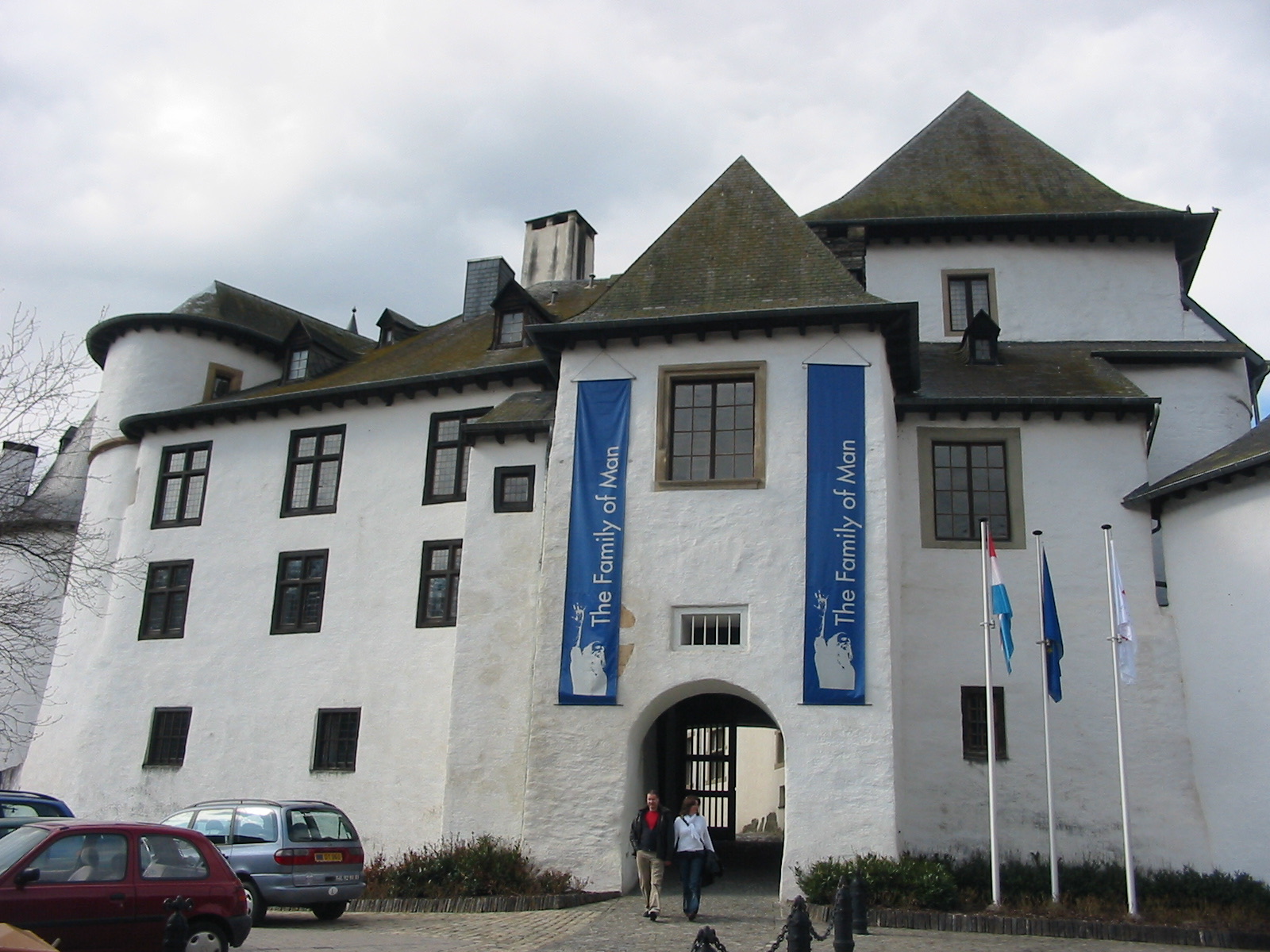

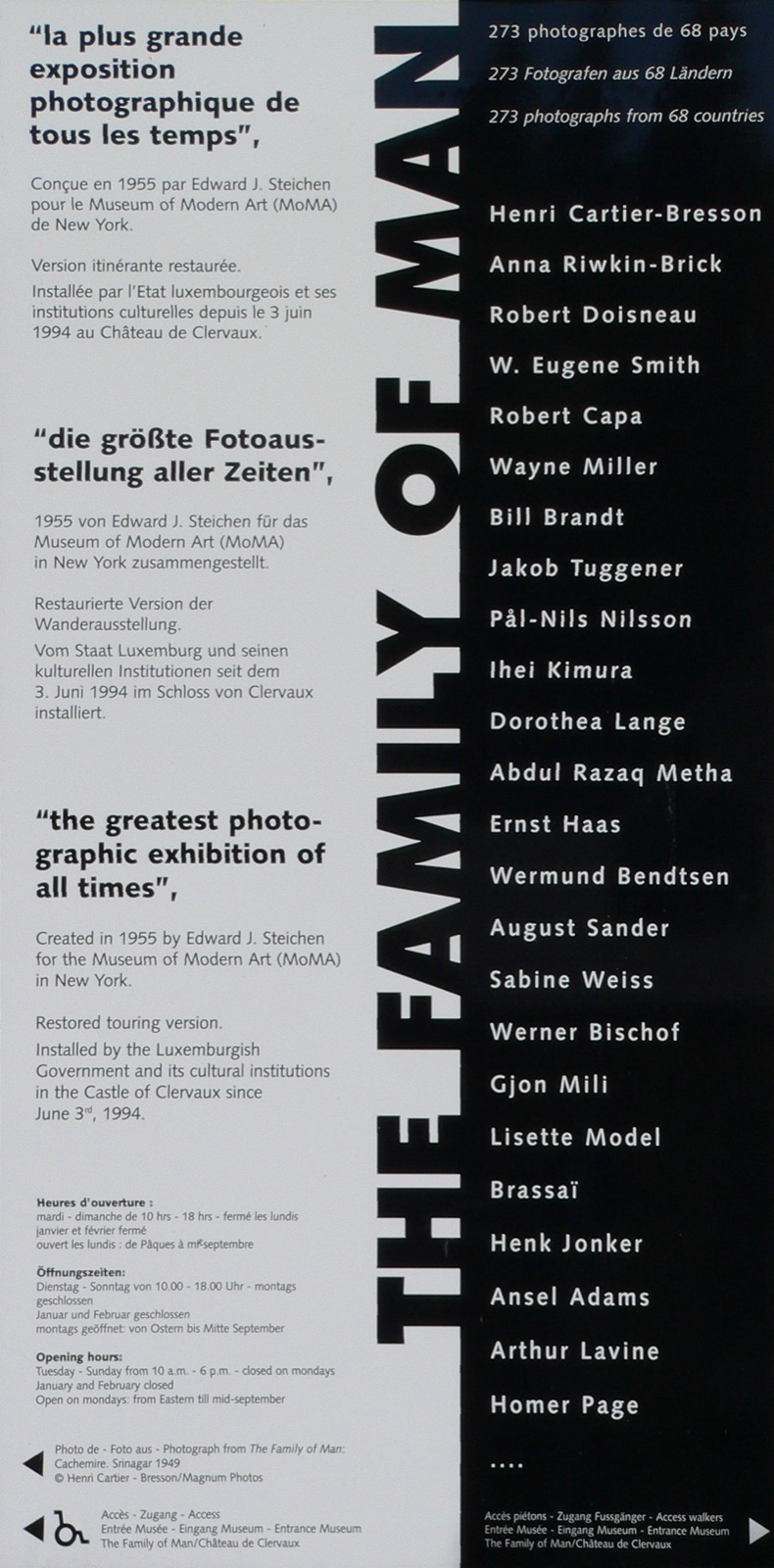
After the world tour concluded, the prints came home to Steichen’s country of birth. Since 1994 the collection has been on permanent display at Clervaux Castle, in northern Luxembourg, under the curation of the Centre national de l’audiovisuel (CNA). What follows is the chronological story of how it got there, anchored on the CNA’s own institutional record.12
The 1964 donation
The CNA’s published chronology dates the Luxembourg arrival to the period 1964–1966. The donor of record is the United States Government — not Steichen personally — although Steichen is preserved as the agent who asked for the gift to be made. The English collections page records the event in the form: “the US Government donates the last complete version of the travelling exhibition to Luxembourg.”1 The German page is more explicit about Steichen’s role: “Die amerikanische Regierung schenkt Luxemburg auf Wunsch Edward Steichens die letzte vollständige Version der Wanderausstellung” — the American government donates to Luxembourg, at Edward Steichen’s request, the last complete version of the touring exhibition.2
Two things follow from this framing. First, what arrived in Luxembourg was a touring set — one of the United States Information Agency–era circulating versions, described as “the last complete version” — not the original 1955 MoMA installation. The relationship between the touring versions and the MoMA mother-set is a matter the CNA pages do not elaborate; resolving it would require U.S. archival sources (USIA records, the MoMA exhibition file) that have not been fetched. Second, the gift was state-to-state, the U.S. government to Luxembourg.
A persistent secondary tradition places the diplomatic ground-laying for this gift at a 1963 Washington state visit, during which Steichen is reported to have met Grand Duchess Charlotte and introduced himself with the line “I am a Luxembourgish boy.”3 This narrative is widely circulated in Luxembourg cultural press but currently rests, on this wiki, on a single Tier-3 source — a 2025 Chronicle.lu report on a public Cercle Cité lecture, which itself does not cite a primary archival document. The Charlotte–Steichen meeting is not corroborated by either of the two CNA pages consulted in this round; verification against the Cour grand-ducale archive or U.S. State Department diplomatic records is a documented open task.
The 1966 Clervaux visit
Steichen visited his birth country in 1966, two years after the donation, and made his preference for Clervaux Castle as the permanent home explicit. The CNA English page records, in its 1964–1966 frame, “Edward Steichen visits his native country and expresses his wish for ‘The Family of Man’ to be exhibited permanently at Clervaux Castle.”1
A more colourful formulation circulates in Luxembourg cultural press — that Steichen “reportedly stated that this was the ideal place for the exhibition to reside”3 — but the “ideal place” wording is not present in either CNA page consulted, and the Chronicle.lu account itself flags it as second-hand. Where a single phrasing must be chosen, the CNA’s “expresses his wish” is the Tier-1 institutional wording and is preferred here.

Storage and partial display
The longest and most opaque period in the Luxembourg chapter is the three decades between donation and permanent installation. The CNA chronology fills part of that gap: from 1974 to 1989, “a partial exhibition of the photographs” was on view at Clervaux Castle — a selection, not the full set, and not the canonical permanent installation that would follow.1
What the CNA pages consulted in this round do not attest:
- Where the prints physically lived between 1964 and 1974. No storage location, conservator-of-record, or intermediate venue is described for that decade. This is a known gap.
- What “partial” meant in 1974–1989. How many prints were shown, in which rooms, under what curatorial framing, with what installation design — none of these specifics is on the pages fetched.
- Why the 1974–1989 period ended, and what bridged the five years to 1994. The chronology jumps from the close of partial display straight to “1994 — Establishment of the collection as a permanent exhibition.”1 The intervening period is unaccounted for.
A future research pass could fill these gaps from a Luxembourg cultural-affairs ministry archival visit, or from contemporary Luxemburger Wort and Tageblatt coverage of the 1974 partial-display opening — neither of which has been consulted on this wiki yet.
The 1994 permanent installation
The CNA dates the establishment of the permanent installation to 1994 — a year only, without an exact day or month on either of the two collections pages fetched.12 The same pages do not name the curator of record for the inauguration, do not describe the 1994 installation design (print placement, room layout, signage), and do not record speakers or programme for the opening event.
Two things on this wiki are therefore deliberately conservative. We say “1994”, not a specific 1994 date. We do not name the 1994 curator. And we do not read the current room architecture — which dates from the 2010–2013 restoration described below — back into 1994. Anyone who visited the installation between 1994 and September 2010 saw a different physical layout than the one a visitor sees today.
The 2010–2013 restoration
The second restoration phase is the most concretely-documented episode in the Luxembourg chapter. The CNA English page supplies dated bookends and team names; the German page summarises the campaign in a single sentence — “Eine zweite Restaurierungsphase wurde in den Jahren 2010-2013 unternommen” — a second restoration phase was undertaken in 2010–2013.2 (The phrasing “second” implies an earlier phase; that earlier phase’s date and scope are not described on either page consulted.)
The headline facts from the English page:1
- September 2010 — Closure of the exhibition for renovation.
- July 2013 — Reopening following renovation of the exhibition rooms and restoration of the photographs.
- The conservation campaign was “led in collaboration with the Studio Berselli from Milan, Italy (Silvia Berselli, Roberta Piantavigna, Francesca Vantellini, Isabel Dimas).”
- The renovated rooms feature “a very sober architecture conceived by designer Nathalie Jacoby (NJOY).”
Two distinguishable sub-projects sit under the umbrella label “the 2010–2013 restoration”: physical conservation of the photographs, led by Studio Berselli with the four named conservators, and renovation of the exhibition rooms, designed by Nathalie Jacoby (NJOY). The CNA page does not break out which conservator handled which subset of the prints, nor which conservation treatments were applied; characterising the methodology in detail would require Studio Berselli’s published record or the CNA’s own annual reports, which have not been fetched here.
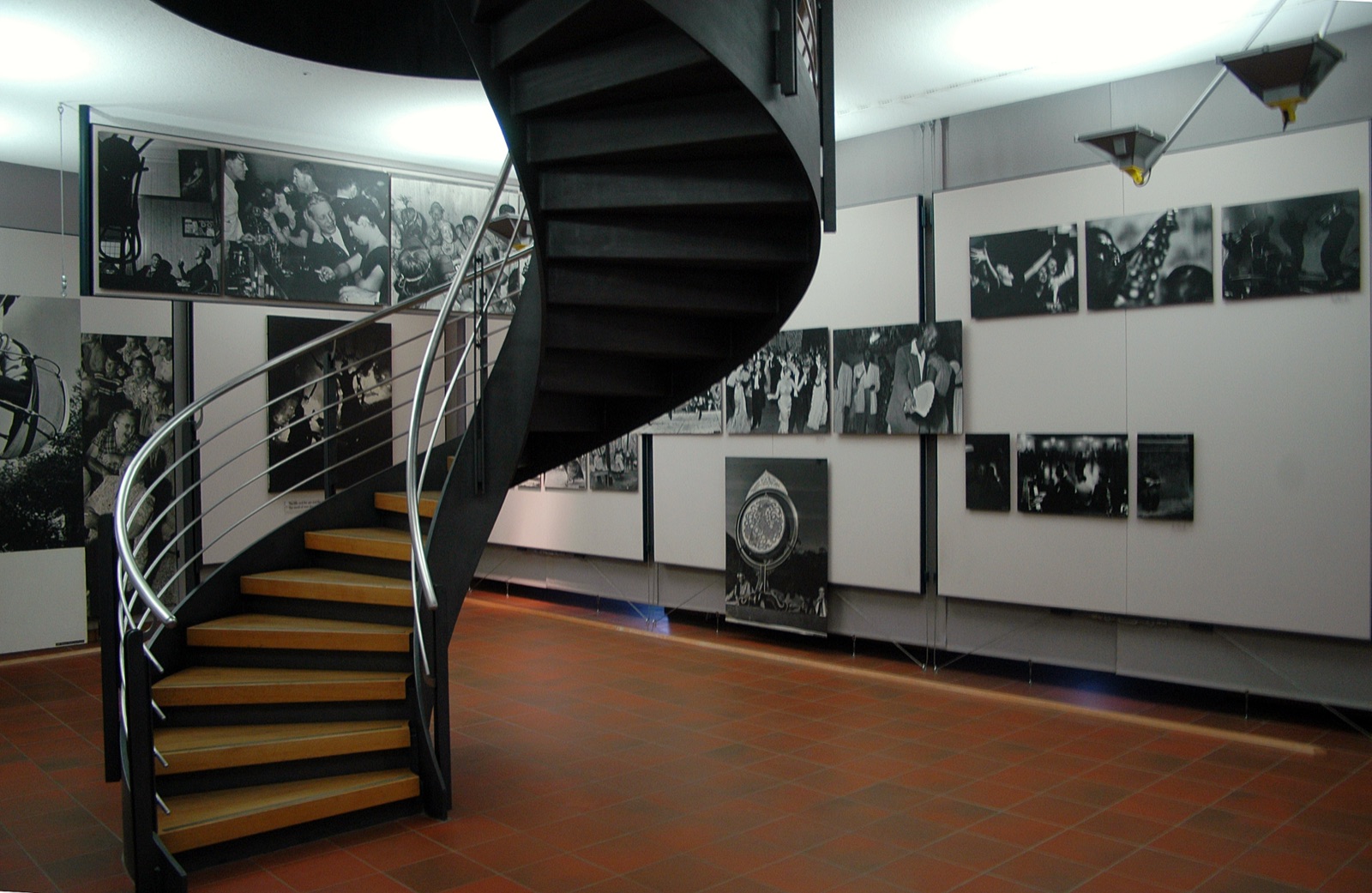

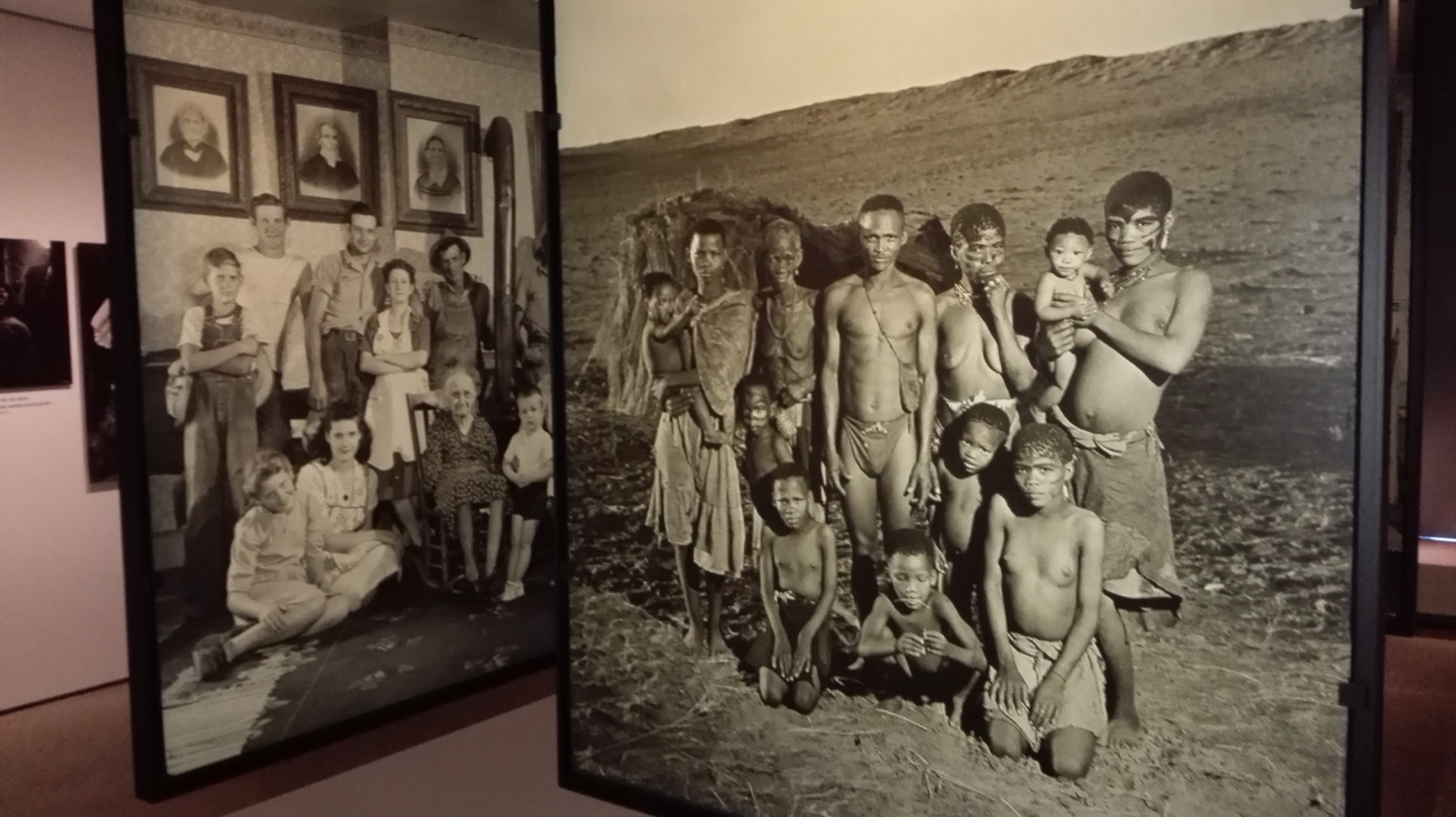
The reopening matters not just as a conservation event but as the moment that fixed the current Clervaux experience. The installation a visitor encounters today is the post-2013 re-installation — Berselli-restored prints in Jacoby’s rooms — not a continuous continuation of the 1994 hang.
.jpg)
Under CNA curation
The Centre national de l’audiovisuel — Luxembourg’s national audiovisual archive — is the institutional custodian of the Clervaux collection. Its custodial role is the through-line that links donation, storage, partial display, permanent installation, and restoration. The CNA publishes two complementary public-facing properties relevant to the exhibition: the multilingual collections-website steichencollections-cna.lu (the source for most of the chronology above) and the educational portal thefamilyofman.education (which carries the curatorial argument for visitors).
The framing the visitor encounters at Clervaux today is, by design, continuous with — and inherits — Steichen’s own argument: a humanist photo-essay across “37 themes like a photo-essay about human development and cycles of life.”4 That “37 themes” count differs from UNESCO’s “32 themes”; we record the discrepancy on the Sections index and do not relitigate it here.
UNESCO recognition
In 2003, The Family of Man was inscribed on UNESCO’s Memory of the World International Register, with the institutional home-of-record listed as Clervaux Castle, Luxembourg, under CNA custodianship.5 The inscription places the Clervaux holding inside an international heritage frame and is the strongest external endorsement of the Luxembourg chapter as a globally-significant cultural-heritage matter. For a fuller treatment of what Memory of the World status does and does not entail, see the UNESCO page.
Visiting
The collection is on permanent view at Clervaux Castle. Visitor information — opening hours, ticketing, accessibility, school programmes, and the educational portal that accompanies the show — is published by the CNA on steichencollections-cna.lu and on the dedicated portal thefamilyofman.education. This wiki does not duplicate the CNA’s visitor pages; it complements them with the historical, curatorial, and critical record. For Steichen’s own life — Bivange, the Naval Aviation Photographic Unit, the 1963 Charlotte meeting — see the Steichen memorial. For the show’s critical reception, see Reception.
research/clervaux.md.
-
Centre national de l’audiovisuel (CNA), Luxembourg. The Family of Man (English collections page). steichencollections-cna.lu/eng/collections/1_the-family-of-man — fetched 2026-04-29.
src-cna-collections-eng-family-of-man. Anchors: 1964–1966 donation framing; 1966 Steichen visit and “expresses his wish” wording; 1974–1989 partial display; 1994 permanent installation; September 2010 closure / July 2013 reopening; Studio Berselli, Milan (Silvia Berselli, Roberta Piantavigna, Francesca Vantellini, Isabel Dimas); Nathalie Jacoby (NJOY) “very sober architecture.” ↩ ↩2 ↩3 ↩4 ↩5 ↩6 ↩7 -
Centre national de l’audiovisuel (CNA), Luxembourg. The Family of Man / Familio de homo (German collections page). steichencollections-cna.lu/deu/collections/1_the-family-of-man — accessed 2026-04-25.
src-cna-collections-deu-family-of-man. Anchors the German wording of the donation, the 1994 permanent installation, and the “second restoration phase 2010–2013” phrasing. The 1974–1989 partial display is attested on the English page only; whether the German page also carries that entry was not re-verified in this round. ↩ ↩2 ↩3 ↩4 -
JCA, “Cercle Cité Lecture Celebrates Life of Edward Steichen,” Chronicle.lu, 1 April 2025.
src-chronicle-lu-2025-cercle-cite-steichen. Tier 3. Carries the 1963 Charlotte / Washington meeting, the “I am a Luxembourgish boy” line, and the second-hand “ideal place” report for the 1966 Clervaux visit. Not corroborated against a Tier-1 archive in this round; both the 1963 meeting and the “ideal place” attribution should be read as plausible Luxembourg-press tradition rather than primary-archival fact. ↩ ↩2 -
Centre national de l’audiovisuel (CNA), Luxembourg. “The Family of Man, the book of humanity” (educational portal).
src-cna-education. The “37 themes” count is verbatim from this source; the CNA portal does not publish a canonical numbered list of all 37. ↩ -
UNESCO. Family of Man, Memory of the World International Register, inscribed 2003.
src-unesco-mow-2003. The “32 themes” count differs from the CNA portal’s “37 themes”; the discrepancy is recorded on this wiki’s Sections index and is not relitigated here. ↩