The World Tour
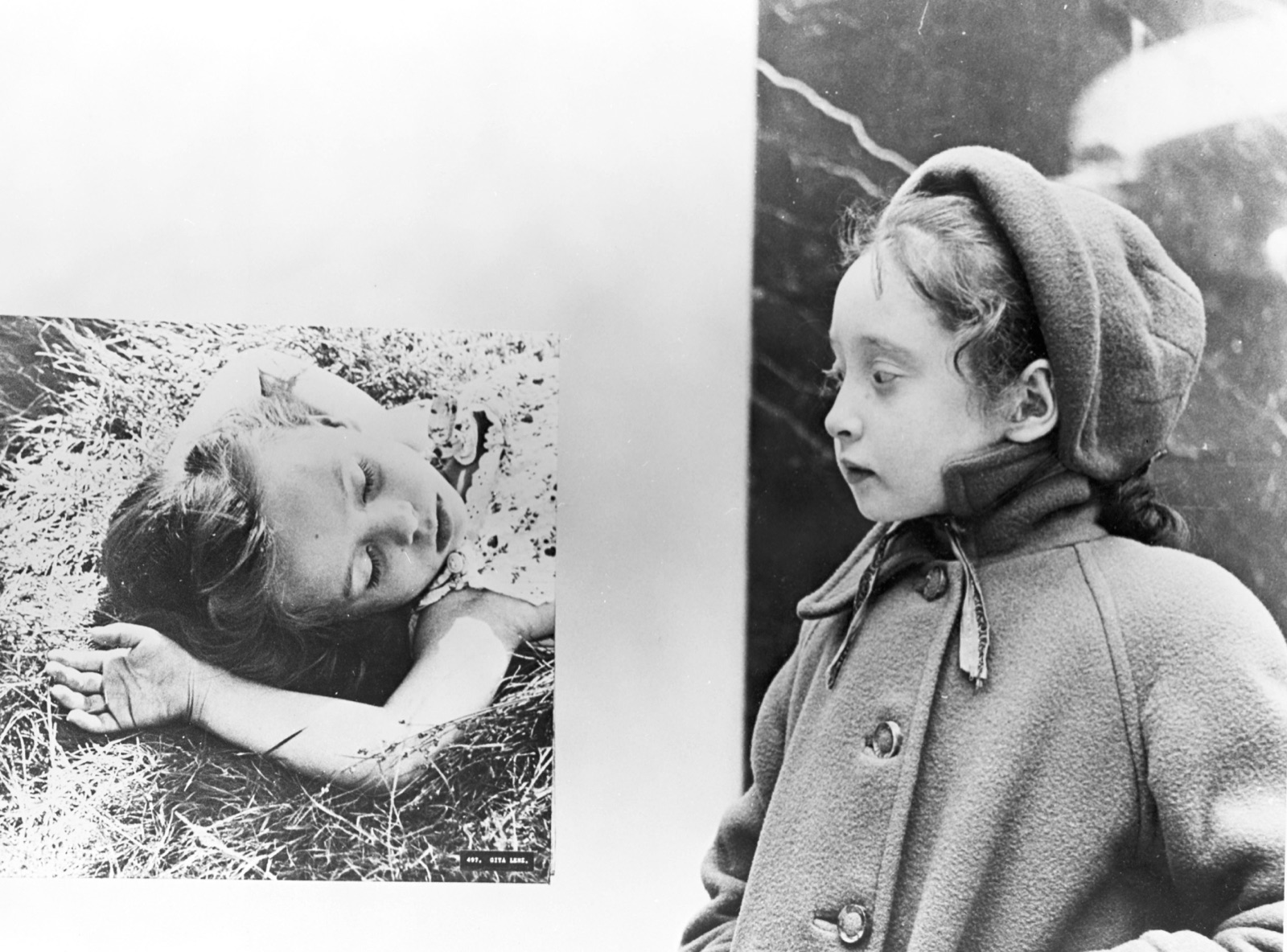

After the New York show closed on 8 May 1955, The Family of Man did not stop — it multiplied. Over the next decade, multiple physically distinct copies circulated under the auspices of the United States Information Agency (USIA), reaching audiences across continents and becoming one of the most-cited instruments of mid-century U.S. cultural diplomacy. This page traces what is verifiable about that circulation from sources in this wiki, and is unusually explicit about what is not.
How the tour actually worked
The tour was not a single physical installation moving from city to city. From the outset, MoMA produced multiple circulating editions — physically distinct copies, partially overlapping with the 1955 New York hang but re-fabricated for travel.1 The CNA Luxembourg education portal characterises the operational model: between 1955 and 1964, “the exhibition became itinerant and toured the world … in the form of ten copies with minor changes sent to nearly 160 towns. Each of the copies was weighing one tonne and a half, was packed in twenty-three crates and required more than six days to be mounted/installed.”2
The same page records the commissioning attribution: “Commissioned by the USIA (United States Information Agency), an American governmental unit created during the Cold War to promote a positive image of the United States in front of the Russian propaganda, the exhibition traveled.”2 The grammar — “in front of the Russian propaganda” — itself encodes a Cold War framing; the CNA inherits the institutional voice of its donor.
This multi-copy structure matters for everything that follows. A “venue count” can either count unique places visited or copy-stops cumulative across all ten copies; an “attendance figure” depends on whether co-located copies are aggregated; an “end-date” can be the last public showing, the last institutional venue, or the date the prints were physically recovered. The same operational reality produces different numbers depending on what you decide to count.
The 1955–56 U.S. domestic tour
The U.S. domestic portion is the best-attested. The 21 June 1955 MoMA press release lists the schedule for six cities:3
| City | Venue | Dates |
|---|---|---|
| Minneapolis | Minneapolis Institute of Art | 21 Jun – 4 Sept 1955 |
| Dallas | Dallas Museum of Fine Arts | 7 Oct – 18 Nov 1955 |
| Cleveland | Cleveland Museum of Art | 24 Jan – 5 Mar 1956 |
| Philadelphia | Philadelphia Museum of Art | 25 Mar – 29 Apr 1956 |
| Baltimore | Baltimore Museum of Art | 30 May – 15 Jul 1956 |
| Pittsburgh | Carnegie Institute | 18 Oct – 29 Nov 1956 |
The MoMA press release does not give per-city attendance, does not address co-fabrication or parallel touring, and does not extend past 29 November 1956.3 Receiving-museum archives and MoMA’s International Program records would close these gaps; none was consulted for this page.
The international edition, from June 1955
A separate international edition went on the road as early as 30 June 1955 — nine days before the Minneapolis opening of the U.S. domestic tour. The press release records its first stop at the Corcoran Gallery in Washington D.C., 30 June – 31 July 1955.3 From there, the international circulation moved abroad under USIA auspices, although the press release itself does not extend past November 1956 and a complete itinerary is not in any source consulted for this wiki.
Verifiable venues abroad
The discipline applied to this page: only assert a venue if it is named in a source that has been fetched into this wiki. The international stops so attested:23
| Venue | City | Country | Dates |
|---|---|---|---|
| Corcoran Gallery | Washington D.C. | USA | 30 Jun – 31 Jul 1955 |
| Palacio Protocolo | Guatemala City | Guatemala | 24 Aug – 18 Sept 1955 |
| Takashimaya Department Store | Tokyo | Japan | March – April 1956 |
| Government Pavilion | Johannesburg | Union of South Africa | 30 Aug – 13 Sept 1958 |
| (venue unspecified) | Moscow | USSR | 1959 (year only) |
The CNA portal also gives a country-level list — “India, Russia, France, Zimbabwe, South Africa, Mexico, Germany, Japan, Australia” — but it is presented as an open-ended sample, not an enumeration.2 Three of those countries resolve to specific venues in the table above; for the other six, no city, venue, or date is attested in sources consulted for this wiki and none is asserted here. The label “Zimbabwe” is anachronistic for the 1955–1964 tour period — the country was Southern Rhodesia until 1980 — and is most likely a later editorial regularisation by the CNA portal.
The Moscow 1959 stop is the most-cited single venue in the reception literature, generally said to have been part of the American National Exhibition at Sokolniki Park, Moscow, July–September 1959 — the show of the Nixon–Khrushchev “Kitchen Debate.” That identification is plausible and widely repeated, but it is not anchored in any source consulted for this wiki: the CNA portal mentions Moscow only by year, with no venue, no dates, no diplomatic context.2 Sandeen 1995 contains a chapter titled “The family of man in Moscow” — the title is visible on the Internet Archive bibliographic record — but the body text is borrow-only and was not accessed for this page.4 The Eisenhower Presidential Library’s holdings on the 1959 American National Exhibition would be the natural primary source; not consulted.
The headline aggregate problem
The figures most commonly cited for the international tour — “9 million visitors / 91 venues / 37 countries” — circulate widely in secondary literature. They are carried in this wiki’s other pages with verified: false flags pointing to U.S. National Archives Record Group 306 (USIA records) as the would-be primary anchor. NARA RG 306 has not been consulted for this page (two fetch attempts during this round were denied), and the figures should not be promoted to confirmed status on the basis of anything in this wiki to date.
The CNA institutional pages give different numbers in different units. The collections page (English) describes the show as a “travelling exhibition, seen by 10 million people throughout the world” between 1955 and 1962.5 The education portal gives “nearly 10 million visitors” across “ten copies … sent to nearly 160 towns” between 1955 and 1964.2 The “ten copies / 160 towns” figure is not unit-equivalent to “91 venues” — towns may double-count (multiple copies stopping in the same town count once or many times), may or may not include U.S. domestic stops, and may use a looser definition of “town” than “venue.” The two cannot be reconciled without the per-copy tour log.
A defensible public-facing summary that does not promote any unverified figure: between 1955 and the early-to-mid 1960s, multiple physically distinct copies of The Family of Man circulated internationally under USIA auspices, reaching a cumulative audience that institutional sources put at approximately ten million across multiple continents. More granular figures — 91 venues, 37 countries, 9 million — circulate in secondary literature but have not been verified against the underlying USIA records for this wiki.
Three end-dates: 1962, 1964, 1965
Three CNA-published institutional pages — same custodial institution, same Tier-1 status — give three different end-dates for the tour:
| Source | End-date | Verbatim wording |
|---|---|---|
src-cna-collections-eng-family-of-man |
1962 | “travelling exhibition, seen by 10 million people throughout the world” between 1955–1962 |
src-cna-education |
1964 | “Between 1955 and 1964, the exhibition became itinerant and toured the world…” |
src-cna-edu-steichen-bio |
1965 | “It opened at MoMA in 1955, then toured the world until 1965 as a consecration of his most ambitious project.” |
The disagreement is not implausible given how the tour worked. A multi-copy circulation can have a last public showing date (1962?), a last institutional venue / prints recovered date (1964 — aligning with the Luxembourg donation arrival), and a Steichen-career-end date (1965, on the bio page). The three dates may also simply reflect different copies retiring at different times: at least ten physical copies were in circulation, and they did not retire together. The honest position for this wiki: the tour ran from 1955 into the early-to-mid 1960s; the three different end-dates are named and attributed; no winner is picked without primary archival evidence.
The 1992–94 pre-inscription touring
A distinct and much later touring wave — separate from the 1955–c.1965 USIA circulation — is briefly recorded on the UNESCO Memory of the World register entry: during “1992 and 1993–1994, restored versions traveled internationally, including stops in Toulouse, Tokyo, and Hiroshima.”7 This wave post-dates the original USIA tour by roughly three decades, used restored prints (conservation-treated, not freshly-fabricated), preceded the 1994 permanent installation at Clervaux Castle, and may have contributed visibility to the 2002 Memory of the World nomination. The venue list is explicitly partial (“including stops in”); the full itinerary would be in CNA records and is not in this wiki.
This is a separate, second touring wave, organised under different institutional auspices (CNA / Luxembourg state, not USIA / U.S. State Department), in a post-Cold-War context. It is sometimes confused in popular accounts with the original USIA tour and should be kept distinct.
Cold War cultural diplomacy
The tour cannot be discussed in a politically neutral register. It was the flagship exhibition of a U.S. government agency whose statutory purpose was the international promotion of American interests during the Cold War; the CNA portal states this baldly.2 The image of mid-century humanism the show carried abroad — Steichen’s universal “essential oneness of mankind” — was, materially, an instrument of U.S. soft power.
The standard scholarly counter-readings:
- Roland Barthes, Mythologies (1957). “The Great Family of Man” argues that the exhibition’s universalising humanism naturalises historical and political difference. Written in response to the Paris stop. In this wiki as
src-barthes-1957; engaged in detail on the Reception page. - Eric Sandeen, Picturing an Exhibition: The Family of Man and 1950s America (1995). The first book-length scholarly study; situates the show within Cold War cultural diplomacy. In this wiki as
src-sandeen-1995. The Internet Archive listing confirms chapters titled “The family of man on the move” and “The family of man in Moscow”; the body text is borrow-only and was not accessed for this page.4 - Fred Turner, The Democratic Surround (2013). Widely cited as the strongest recent reading of the exhibition’s liberal-internationalist visual culture. Not in this wiki, not consulted; named here only as a pointer for future research.
- Allan Sekula’s essays (“The Traffic in Photographs,” 1981; “Reading an Archive,” 1986). Frequently cited as the strongest Marxist critique of the show as ideological work. Not in this wiki, not consulted; named here only as a pointer.
The contribution this page makes — over and above the Reception page, which engages Barthes at the level of the exhibition’s content — is the layer specific to the tour: the same humanist argument, shipped abroad in ten parallel copies under USIA auspices, functioned as an instrument of state cultural policy.
After the tour
Per the CNA’s German collections page: “Die amerikanische Regierung schenkt Luxemburg auf Wunsch Edward Steichens die letzte vollständige Version der Wanderausstellung” — the American government donates to Luxembourg, at Edward Steichen’s request, the last complete version of the touring exhibition.8 The donation arrived in Luxembourg during 1964–1966.
That phrasing — “the last complete version” — is informative for the tour. At least one of the ten copies survived in complete form and was donated whole to Luxembourg, consistent with the multi-copy operational model. The fates of the other copies are not addressed in any source consulted for this wiki. A future research pass should attempt to recover, from MoMA International Program records or USIA exhibition files, the disposition of each copy at tour-end.
The full Luxembourg chapter — storage, partial display 1974–1989, the 1994 permanent installation at Clervaux Castle, the 2010–2013 restoration — is on the Clervaux page and is not duplicated here.

research/world-tour.md.
-
Museum of Modern Art, Master Checklist for Exhibition #569 (The Family of Man).
src-moma-exh-0569-master-checklist. The checklist is headed “1955–56 — An exhibition prepared and circulated by The Museum of Modern Art” and documents the circulating-edition model. ↩ -
Centre national de l’audiovisuel (CNA), Luxembourg. “The Family of Man, the book of humanity” (educational portal).
src-cna-education. Re-verified 2026-04-29. Anchors the USIA-commissioning attribution; the 1955–1964 touring frame; the “ten copies with minor changes sent to nearly 160 towns” operational model with per-copy logistics (1.5 tonnes / 23 crates / 6 days); the “nearly 10 million visitors” attendance figure; the open-ended country list; and four geo-located image captions for tour stops in Guatemala City (1955), Tokyo (1956), Johannesburg (1958), and Moscow (1959, year-only). ↩ ↩2 ↩3 ↩4 ↩5 ↩6 ↩7 ↩8 -
Museum of Modern Art press release for The Family of Man book publication, 21 June 1955.
src-moma-1955-press-release-book. Page 2 carries the U.S. domestic six-city tour schedule (Minneapolis → Dallas → Cleveland → Philadelphia → Baltimore → Pittsburgh, June 1955 – November 1956) and records the international edition’s first stop at the Corcoran Gallery, Washington D.C., 30 June – 31 July 1955. ↩ ↩2 ↩3 ↩4 -
Eric Sandeen, Picturing an Exhibition: The Family of Man and 1950s America (Albuquerque: University of New Mexico Press, 1995).
src-sandeen-1995. Tier 2. Internet Archive bibliographic record (fetched 2026-04-29) confirms chapter titles “The family of man on the move” and “The family of man in Moscow”; body text is borrow-only and was not accessed for this page. Page-level citations are deferred until a direct read is completed. ↩ ↩2 -
Centre national de l’audiovisuel (CNA), Luxembourg. The Family of Man (English collections page).
src-cna-collections-eng-family-of-man. Re-verified 2026-04-29. Anchors the “travelling exhibition, seen by 10 million people throughout the world” wording and the 1955–1962 tour-period framing. ↩ ↩2 -
Centre national de l’audiovisuel (CNA), Luxembourg. “Edward Steichen: From a Man of His Time to an Artist Out of Time” (educational portal).
src-cna-edu-steichen-bio. Anchors the 1965 end-date: “It opened at MoMA in 1955, then toured the world until 1965 as a consecration of his most ambitious project.” ↩ -
UNESCO. Family of Man, Memory of the World International Register entry.
src-unesco-mow-2003. Re-verified 2026-04-29. Anchors the 1992 / 1993–1994 pre-inscription touring with venues in Toulouse, Tokyo, and Hiroshima. ↩ -
Centre national de l’audiovisuel (CNA), Luxembourg. The Family of Man / Familio de homo (German collections page).
src-cna-collections-deu-family-of-man. Anchors the “letzte vollständige Version der Wanderausstellung” donation framing. ↩