UNESCO Memory of the World
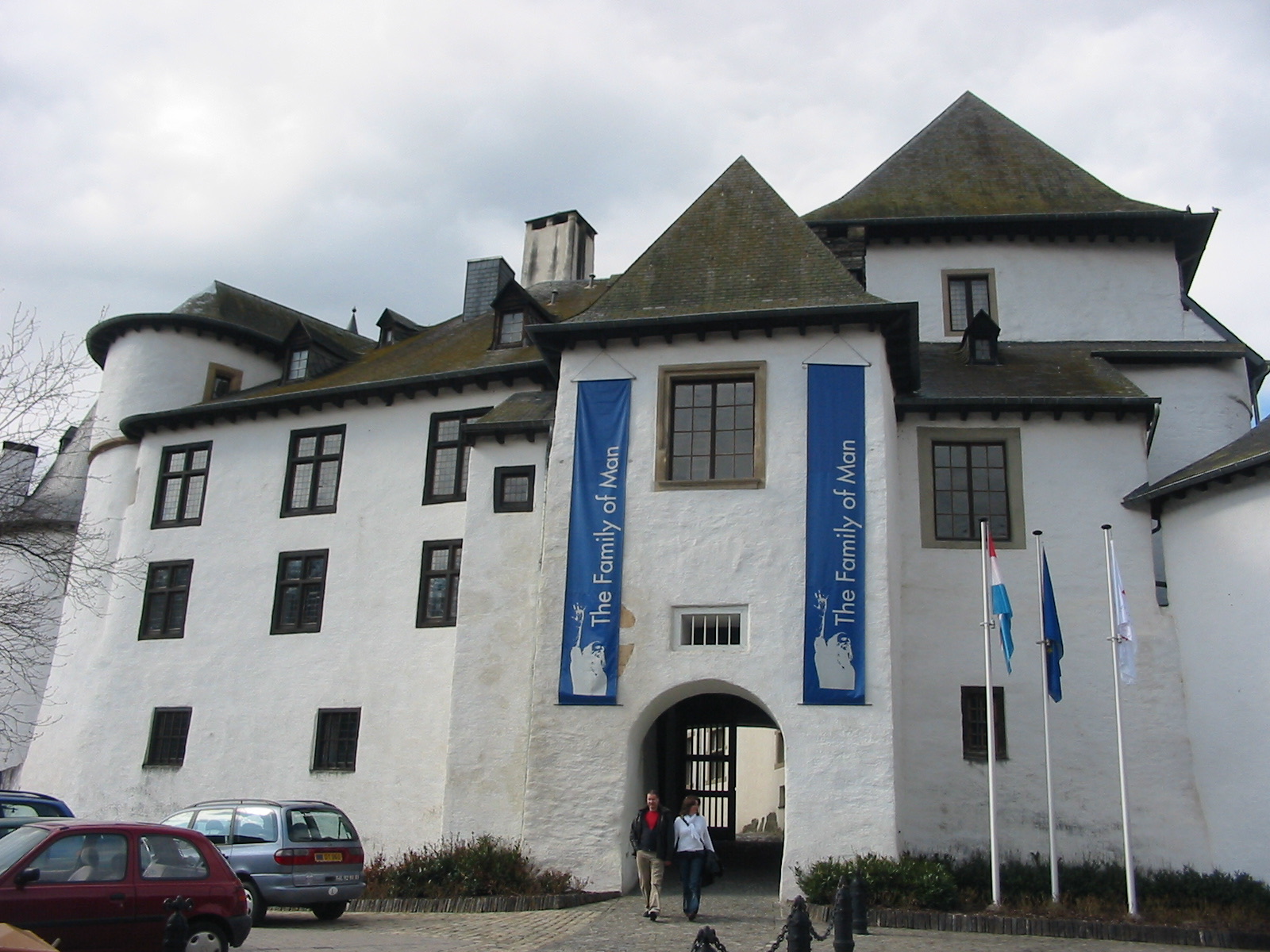

In 2003, the Clervaux collection of The Family of Man was inscribed on UNESCO’s Memory of the World International Register.1 This page covers the inscription itself: the framework under which it was made, the language the register uses to justify it, and what inscription does and does not change about how the collection sits in the world. The Luxembourg institutional history — Steichen’s donation request, the Clervaux installation from 1994, the 2010–2013 restoration — is on the Clervaux page and is not repeated here.
The Memory of the World programme
UNESCO established the Memory of the World programme in 1992, in response to growing concern about the deterioration and loss of documentary heritage worldwide — through conflict, institutional neglect, physical decay, and unequal access to collections.2 The programme’s stated aspiration is that “The world’s documentary heritage belongs to all, should be fully preserved and protected for all and, with due recognition of cultural mores and practicalities, should be permanently accessible to all without hindrance.”2
The programme is governed internationally by the International Advisory Committee (IAC), comprising 14 members appointed by UNESCO’s Director-General, and operates through regional and national committees.2 It is normatively underpinned by the 2015 UNESCO Recommendation Concerning Preservation of, and Access to, Documentary Heritage, which codified the programme’s mandate in international soft law.2
How Memory of the World differs from the World Heritage List
The better-known World Heritage List designates places — built environments, cultural landscapes, natural sites — as having outstanding universal value. The Memory of the World Register inscribes documentary heritage: archive holdings, library collections, film records, photographs, manuscripts, and other documentary objects of world significance. The two share UNESCO’s umbrella and the vocabulary of “outstanding universal value,” but operate through separate nomination procedures, separate advisory bodies, and separate registers. An item on the Memory of the World Register need not have any relationship with a World Heritage Site, and a World Heritage Site inscription says nothing about the documentary holdings within it.
For The Family of Man, this distinction matters practically: it is the printed photographs and their documentation — the documentary artefact — that is inscribed, not Clervaux Castle as a place. (Clervaux Castle has no separate World Heritage inscription.)
The 2003 inscription
The register entry for The Family of Man records the following metadata:1
| Field | Value |
|---|---|
| Registration Year | 2003 |
| Submission Year | 2002 |
| Submitted by | Luxembourg |
| Region | Europe and North America |
| Document Type | Books |
The submitting state, Luxembourg, is consistent with the institutional context: the collection had been in Luxembourg’s custody since the 1964–1966 U.S. Government donation and, from 1994, under the permanent stewardship of the Centre national de l’audiovisuel at Clervaux Castle (see the Clervaux page for that history). The nomination was prepared and submitted approximately nine years after the 1994 permanent installation opened.
Inscription itself is a two-step pathway — recommendation by the IAC, then endorsement by UNESCO’s Executive Board — applied to all entries on the International Register, which has accepted inscriptions since 1995.2 As of April 2026 the register lists 570 inscribed items worldwide.2
The register page links to two nomination forms — English and French PDFs at media.unesco.org — which would carry the full formal justification text submitted to the IAC in 2002. The PDFs were attempted in this round and access was denied; the URLs are recorded in the source entry, but their content is not quoted on this page.1 A future research pass should fetch them.
What the register says
The justification language carried on the UNESCO register page itself — distinct from the unread nomination form — characterises the inscription in the following terms.1
On the collection’s composition:
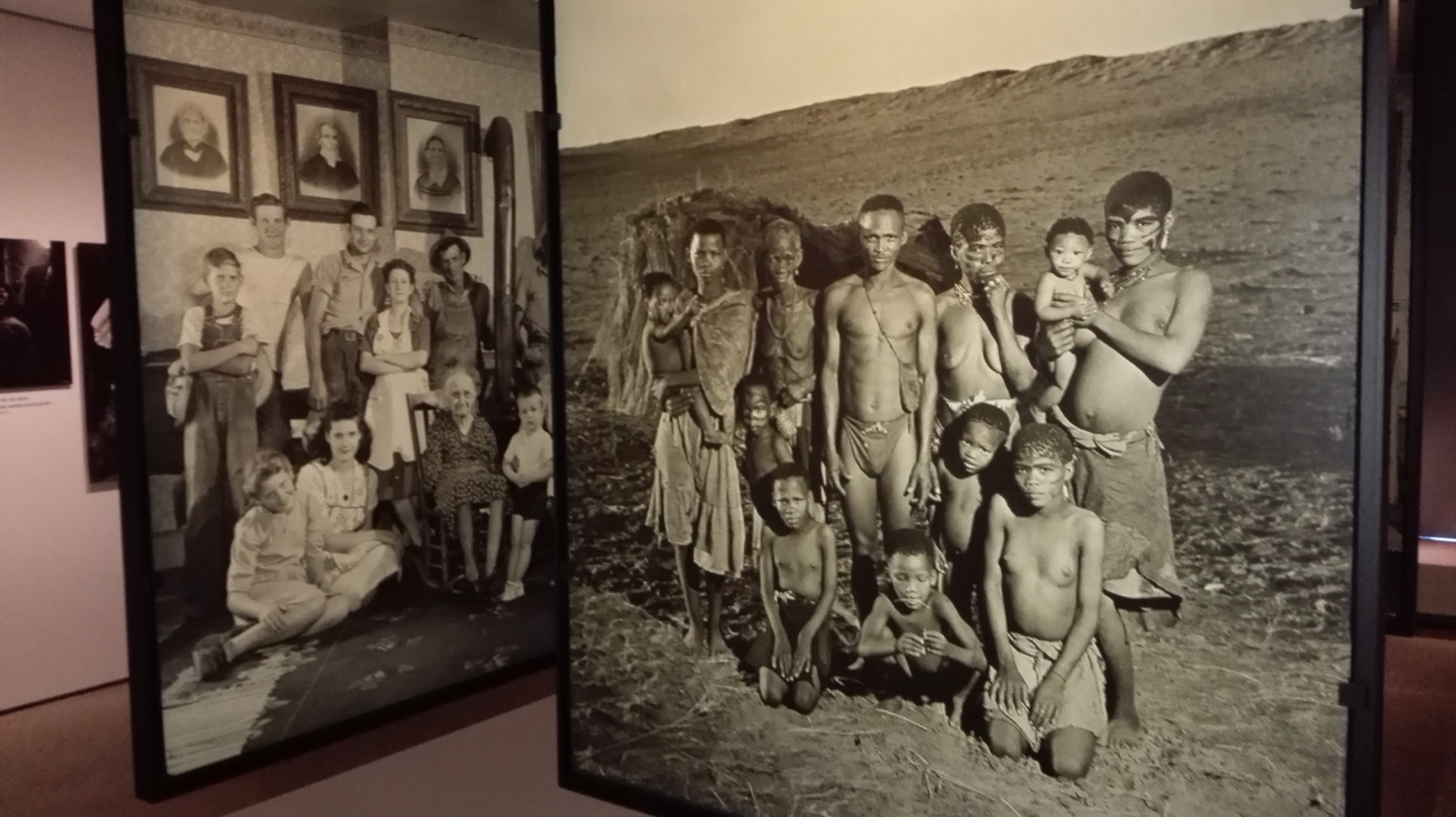
“it consists of 503 photographs taken by 273 photographers, both professional and amateur, famous and unknown, from 68 countries.”
On its thematic structure:
“The 32 themes, arranged chronologically, reflect the subjects’ joys and sadnesses, their satisfactions and their unhappinesses, and their longing for peace.”
On its historical standing:
“Regarded as the ‘greatest photographic enterprise ever undertaken’.”
On Steichen’s approach and its continuing relevance:
“The very personal approach of Steichen arouses interest and exercises minds to this day.”
On its political and historical framing:
The exhibition is described as conveying “a personal, humanist message that was both courageous and provocative,” and as serving as “the memory of an entire era, that of the Cold War and McCarthyism.”
The last formulation is notable: it acknowledges the Cold War political context that has driven the show’s critical reception since Roland Barthes’s Mythologies (1957) — but it frames that context as part of the exhibition’s significance rather than as a limitation. UNESCO does not adjudicate between Steichen’s universalist humanism and Barthes’s critique; it inscribes the artefact and lets the scholarship continue.
The canonised figures
The inscription anchors three headline figures and one structural figure for the collection:1
- 503 photographs
- 273 photographers
- 68 countries
- 32 themes
The first three are the same numbers MoMA’s 1955 master checklist anchors and that the Photographs index is built around. The fourth — “32 themes” — is the count UNESCO carries.1 The CNA Luxembourg education portal publishes a different count: “37 themes like a photo-essay about human development and cycles of life.”3 Both counts are Tier-1-adjacent institutional claims, established at different moments by different institutions for different audiences. This wiki records the discrepancy on the Sections index and does not adjudicate.
What inscription does and doesn’t entail
Memory of the World inscription is a form of recognition and visibility, not a legal protection regime. It is important to be clear about what changes when an item is inscribed and what does not.
What inscription does:
- Lists the item on the International Register, making it discoverable through UNESCO’s heritage infrastructure and searchable alongside other inscribed documentary heritage worldwide.
- Associates UNESCO’s institutional authority with the item’s characterisation as documentary heritage of “world significance and outstanding universal value.”2
- Provides a recognised international reference point for the holding institution — useful for grant applications, international partnerships, and public communication of the collection’s significance.
What inscription does not do:
- It confers no ownership rights. Legal title to the prints remains with the CNA Luxembourg / the Luxembourg state.
- It imposes no mandatory conservation standards on the holding institution — the programme encourages best practice, but does not enforce it.
- It creates no legal barriers against deaccession, loan, reproduction, or other institutional decisions about the collection.
- It is not the same as inscription on the World Heritage List, and does not affect Clervaux Castle as a physical site.
The 2015 UNESCO Recommendation provides a normative framework that member states are encouraged to implement,2 but it is a recommendation — not a binding treaty — and its relationship to any specific inscribed item is advisory rather than mandatory.
1992–1994 pre-inscription touring
The UNESCO register entry briefly notes that “during 1992 and 1993–1994, restored versions traveled internationally, including stops in Toulouse, Tokyo, and Hiroshima.”1 This pre-inscription circulation — restored prints touring internationally in the years immediately before the 1994 Clervaux permanent installation opened — is a small-but-important addition to the world tour timeline, which is otherwise dominated by the 1955–1962 USIA-sponsored circulation. It also speaks to the collection’s already-international visibility at the moment of the 2002 nomination.
.jpg)
Anniversaries
The inscription occurred in 2003. Decennial milestones therefore fall in 2013 (10th anniversary) and 2023 (20th anniversary). Quinquennial milestones fall in 2008, 2018, and 2028.
Whether the CNA, UNESCO, or other institutions marked the 2013 or 2023 anniversaries with a dedicated event, publication, or symposium is not currently attested in this wiki — no anniversary records were consulted in the research round that produced this page. The natural sources for a future pass are the CNA’s annual reports for 2013 and 2023 and Luxembourg cultural-affairs press coverage in Luxemburger Wort and Tageblatt for those years. The UNESCO register page consulted does not itself mention any anniversary events.1
Significance
Within the wider context of post-war humanist photographic heritage, the 2003 Memory of the World inscription is the strongest formal external endorsement of the Clervaux collection’s global significance. It places The Family of Man on a register whose inscribed items range across documentary heritage as varied as the Magna Carta, the Bayeux Tapestry’s documentary record, the Gutenberg Bible, and Anne Frank’s diary — items whose significance crosses national and cultural boundaries. (Whether each of those specific items is itself currently inscribed on the Memory of the World Register was not verified in this round; the comparison is to the kind of heritage the register collects.)
For the specific collection at Clervaux, the practical significance of inscription is threefold. First, it formally validates Luxembourg’s role as custodian of a globally-significant documentary heritage — an argument that supports continued public investment in CNA stewardship. Second, it anchors the collection within an international heritage infrastructure, making it discoverable and citable across languages and jurisdictions. Third, the inscription year (2003) predates the 2010–2013 restoration campaign by seven years: the restoration that today’s visitor sees was therefore carried out on an already-inscribed collection, under the visibility and reputational weight that inscription confers. See Clervaux for that restoration’s detail.
The figures the register canonises in 2003 — 503 photographs, 273 photographers, 68 countries — remain the canonical reference numbers cited across institutional, educational, and scholarly contexts for the collection.
research/unesco.md.
-
UNESCO. Family of Man, Memory of the World International Register, inscribed 2003. unesco.org/en/memory-world/family-man — re-verified 2026-04-29.
src-unesco-mow-2003. Anchors: registration year 2003, submission year 2002, submitting state Luxembourg, region Europe and North America, document type Books; the 503/273/68 composition figure; the “32 themes” count; the “greatest photographic enterprise”, “very personal approach,” “courageous and provocative,” and “memory of an entire era, that of the Cold War and McCarthyism” justification quotations; the 1992 / 1993–1994 pre-inscription touring note (Toulouse, Tokyo, Hiroshima); URLs for the English and French nomination form PDFs. PDFs themselves were not fetched in this round. ↩ ↩2 ↩3 ↩4 ↩5 ↩6 ↩7 ↩8 -
UNESCO. Memory of the World Programme — overview, About, and Register landing pages. unesco.org/en/memory-world ; /about ; /register — fetched 2026-04-29.
src-unesco-mow-programme. Anchors: 1992 founding; the “world’s documentary heritage belongs to all” aspiration; the International Advisory Committee with 14 members appointed by the Director-General; the IAC + Executive Board two-step inscription pathway; the “world significance and outstanding universal value” selection criterion; the 2015 UNESCO Recommendation Concerning Preservation of, and Access to, Documentary Heritage; the 570-inscriptions running total (current at 2026-04-29 fetch). ↩ ↩2 ↩3 ↩4 ↩5 ↩6 ↩7 ↩8 -
Centre national de l’audiovisuel (CNA), Luxembourg. “The Family of Man, the book of humanity” (educational portal).
src-cna-education. The “37 themes like a photo-essay about human development and cycles of life” count is verbatim from this source. ↩