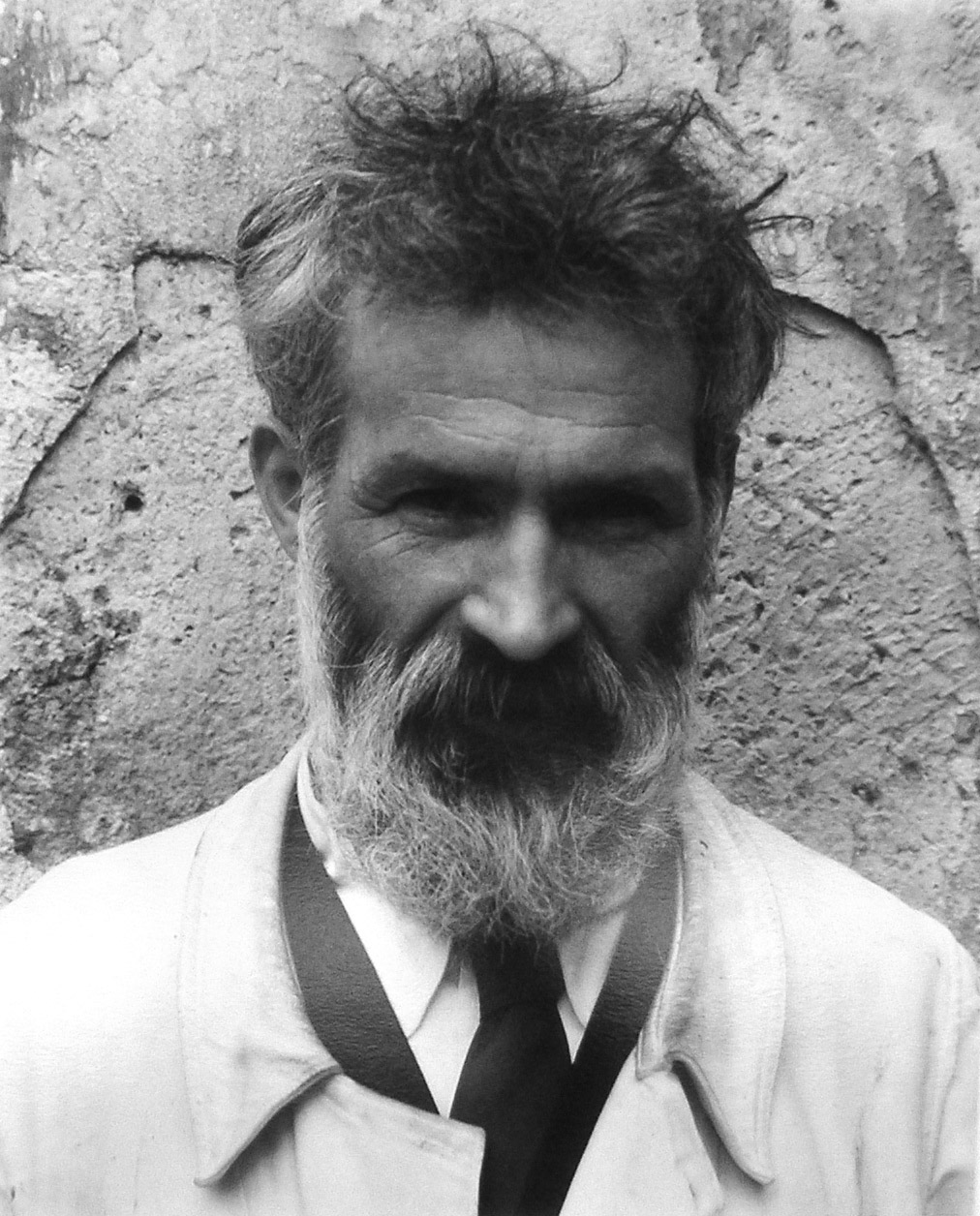
Across the 1920s Steichen made a series of photographs of Brancusi inside his Paris studio. The most-published of these, the 1925 portrait Brancusi in His Studio, Paris, is anchored in this wiki at Tier 2 through an Aperture Foundation print record; earlier studio photographs dated 1920 and a portrait dated 1922 are recorded at the Wikipedia level only and remain pointer-only here until the Met and MoMA collection records can be re-fetched.
At Steichen's house in Voulangis, in the French countryside outside Paris, Brancusi's Endless Column stood in the garden — recorded today as Brancusi's "Endless Column" in Mr. Steichen's Garden, Voulangis, France in the Metropolitan Museum's photography collection (the catalog page returned 403 in our research round; the title is carried as a Wikipedia pointer). The Voulangis piece reflects how directly Steichen lived with Brancusi's work — a sculpture by the artist standing in his own garden, around the same years that he was photographing Brancusi inside the Paris studio.
"…a so-called new school of art, whose exponents attempt to portray abstract ideas rather than imitate natural objects."
Justice J. Waite, opinion of the U.S. Customs Court in Brancusi v. United States, November 1928 (verbatim fragment as preserved on the Steichen page; pointer-only via Wikipedia and the Bellevue College court-extract reproduction, not the official court reporter).
In October 1926 a Bird in Space bronze arrived in New York harbor on the steamship Paris, alongside nineteen other Brancusi sculptures destined for U.S. exhibition. U.S. Customs officials refused to classify the polished bronze as art; under the 1922 Tariff Act, an "original work of a professional sculptor" was duty-free, but the officials saw a "manufactured metal object" subject to a 40% tariff. Steichen filed an appeal in November 1926. The case became Brancusi v. United States; in November 1928, Judges Young and Waite of the U.S. Customs Court ruled in favor of the artist. Whether Steichen personally took the witness stand alongside Jacob Epstein and other witnesses, or whether his name appears only as the consignee/appellant on the case caption, is not resolved by the pointer sources used here — see the full Steichen page for the open questions and the upgrade path.
Perspective note. This section follows the standard secondary-literature framing of Brancusi v. United States, with Steichen as importer and appellant. Other readings exist: Marcel Duchamp's role in organising the U.S. shipment and placing Brancusi's work with American collectors is treated by some art historians as more central to the New York side of the affair than Steichen's; later scholarship has also read the case in terms of art-market consolidation and the institutional canonisation of male modernist sculpture. Those readings are not anchored to in-repo Tier-1/2 sources in this round — the perspective note as it appears in the long-form section on /steichen/ is the canonical version.
Read the full Brâncuși and Steichen page →