Reception
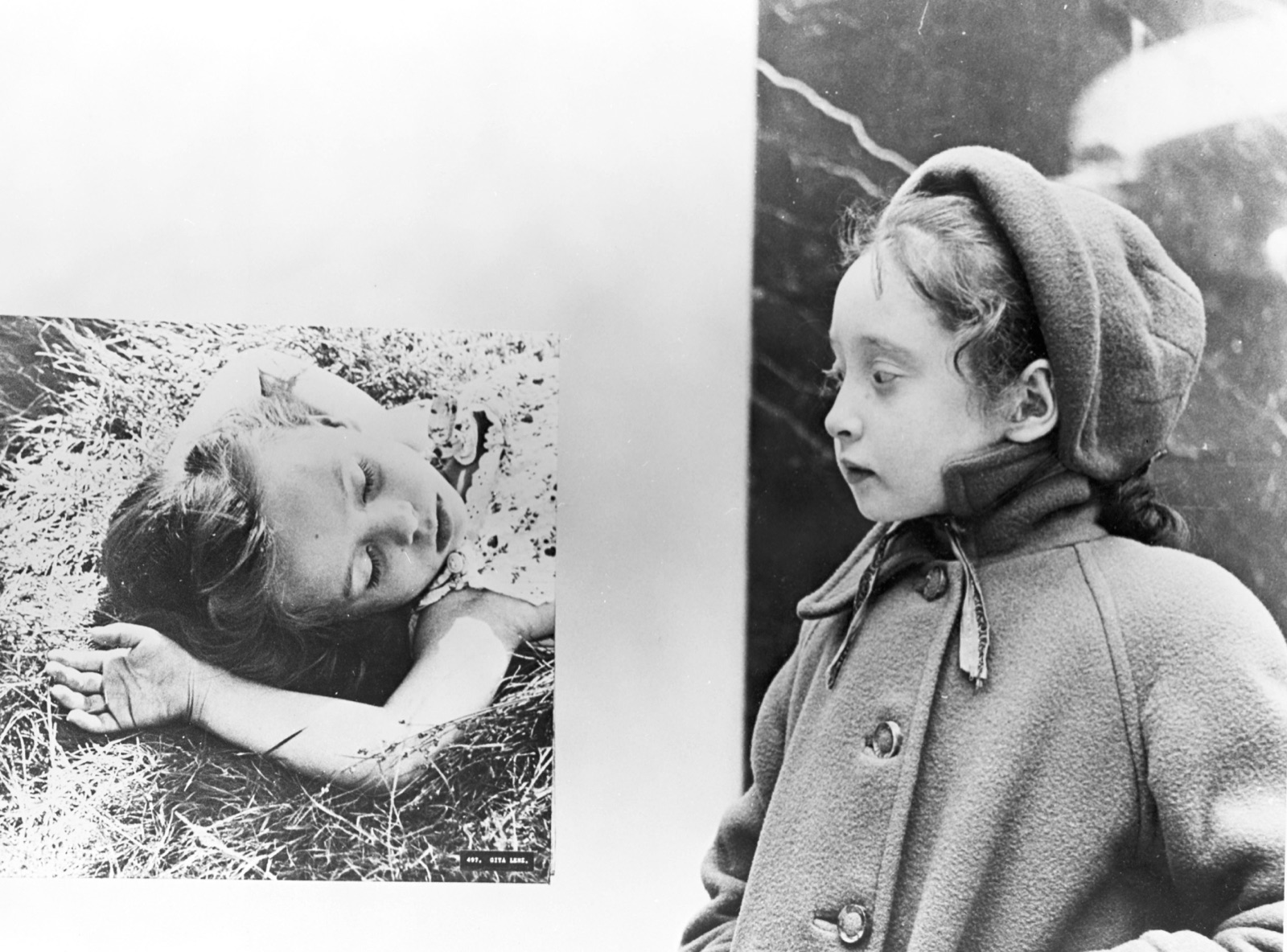

The Family of Man has been one of the most intensely debated exhibitions in the history of photography. From its opening at MoMA in 1955 it drew immense popular acclaim and, almost immediately, sustained scholarly critique. The argument has not stopped.
Roland Barthes, The Great Family of Man (1957)
The foundational critical reading appears in Barthes’s Mythologies (1957), in the essay “La grande famille des hommes,” translated into English by Annette Lavers as “The Great Family of Man.” Barthes opens with the show’s stated thesis:
“A big exhibition of photographs has been held in Paris, the aim of which was to show the universality of human actions in the daily life of all the countries of the world: birth, death, work, knowledge, play, always impose the same types of behaviour; there is a family of Man.”1
He then names what he sees as the show’s structural sleight of hand — its translation of universal as natural:
“The French have translated it as: The Great Family of Man. So what could originally pass for a phrase belonging to zoology, keeping only the similarity in behaviour, the unity of a species, is here amply moralized and sentimentalized.”1
The essay’s central charge — that the exhibition strips politics out of the everyday by re-coding history as nature — is delivered in two pivotal sentences:
“This myth functions in two stages: first the difference between human morphologies is asserted, exoticism is insistently stressed … Then, from this pluralism, a type of unity is magically produced: man is born, works, laughs and dies everywhere in the same way …”1
“This myth of the human ‘condition’ rests on a very old mystification, which always consists in placing Nature at the bottom of History.”1
The essay’s most-quoted passage is the political one. In a single rhetorical question Barthes points at the substitution that the show’s framing requires:
“Why not ask the parents of Emmet Till, the young Negro assassinated by the Whites what they think of The Great Family of Man?”1
Emmett Till was murdered in Mississippi in August 1955 — seven months after The Family of Man opened at MoMA. Barthes’s question places a specific historical event against the exhibition’s universalist frame and asks whether the frame can survive the placement.
The essay closes on the politics of frozenness:
“So that I rather fear that the final justification of all this Adamism is to give to the immobility of the world the alibi of a ‘wisdom’ and a ‘lyricism’ which only make the gestures of man look eternal the better to defuse them.”1
Barthes’s reading has been the canonical counter-voice in the secondary literature for nearly seventy years. Later critics’ specific positions relative to him are summarised on this page only where their texts have been consulted in this repo — currently only Sandeen.
Eric Sandeen, Picturing an Exhibition (1995)
Eric J. Sandeen’s Picturing an Exhibition: The Family of Man and 1950s America (University of New Mexico Press, 1995) is the standard book-length historical study of the show. Reviewed in The American Historical Review and Journal of American Studies, the book reconstructs the exhibition’s thematic sequencing from photograph-by-photograph analysis of the MoMA installation and catalog, and frames the show’s humanist argument against its Cold War political context.2
Sandeen’s contribution, on the framing the in-repo source file describes, is to refuse the binary that Barthes set up. Where Barthes reads the show as a single ideological gesture, Sandeen reads it as a worked artefact — a curated sequence with internal logic, embedded in the USIA tour and in the broader Cold War context of American cultural diplomacy. The book is the minimum scholarly anchor for any interpretive claim this wiki makes about the exhibition’s thematic argument.2
data/sections.csv or research/sections.md, the citation is to the book's overall argument; the notes column records what level of granularity each citation carries.
The wider critical thread
Four further voices are conventionally cited as part of the show’s critical reception. Source files for these are not yet in this repository and none of them was fetched in this round of citation work. They are listed below at the level of bare bibliographic metadata only — the wiki does not summarise their arguments here because doing so without consulting the texts would violate the museum-grade-accuracy rule.
- Susan Sontag, On Photography (Farrar, Straus and Giroux, 1977).
- Allan Sekula, “The Traffic in Photographs,” Art Journal 41:1 (1981).
- Blake Stimson, The Pivot of the World: Photography and Its Nation (MIT Press, 2006).
- Fred Turner, The Democratic Surround: Multimedia and American Liberalism from World War II to the Psychedelic Sixties (University of Chicago Press, 2013).
Adding source files for these four — and quoting and characterising their arguments from primary text — is an explicit open task. See issue #26 for the tracking ticket.
-
Roland Barthes, “The Great Family of Man,” in Mythologies (1957), Lavers translation, Hill and Wang, 1972 —
src-barthes-1957. All six quotations in this section are verbatim from the in-repo source file’s “Key excerpts” block. ↩ ↩2 ↩3 ↩4 ↩5 ↩6 -
Eric J. Sandeen, Picturing an Exhibition: The Family of Man and 1950s America (University of New Mexico Press, 1995) —
src-sandeen-1995. Per the in-repo source-file caveat, page-level citations are deferred until a physical or unrestricted digital copy is consulted. ↩ ↩2