Constantin Brâncuși and Edward Steichen
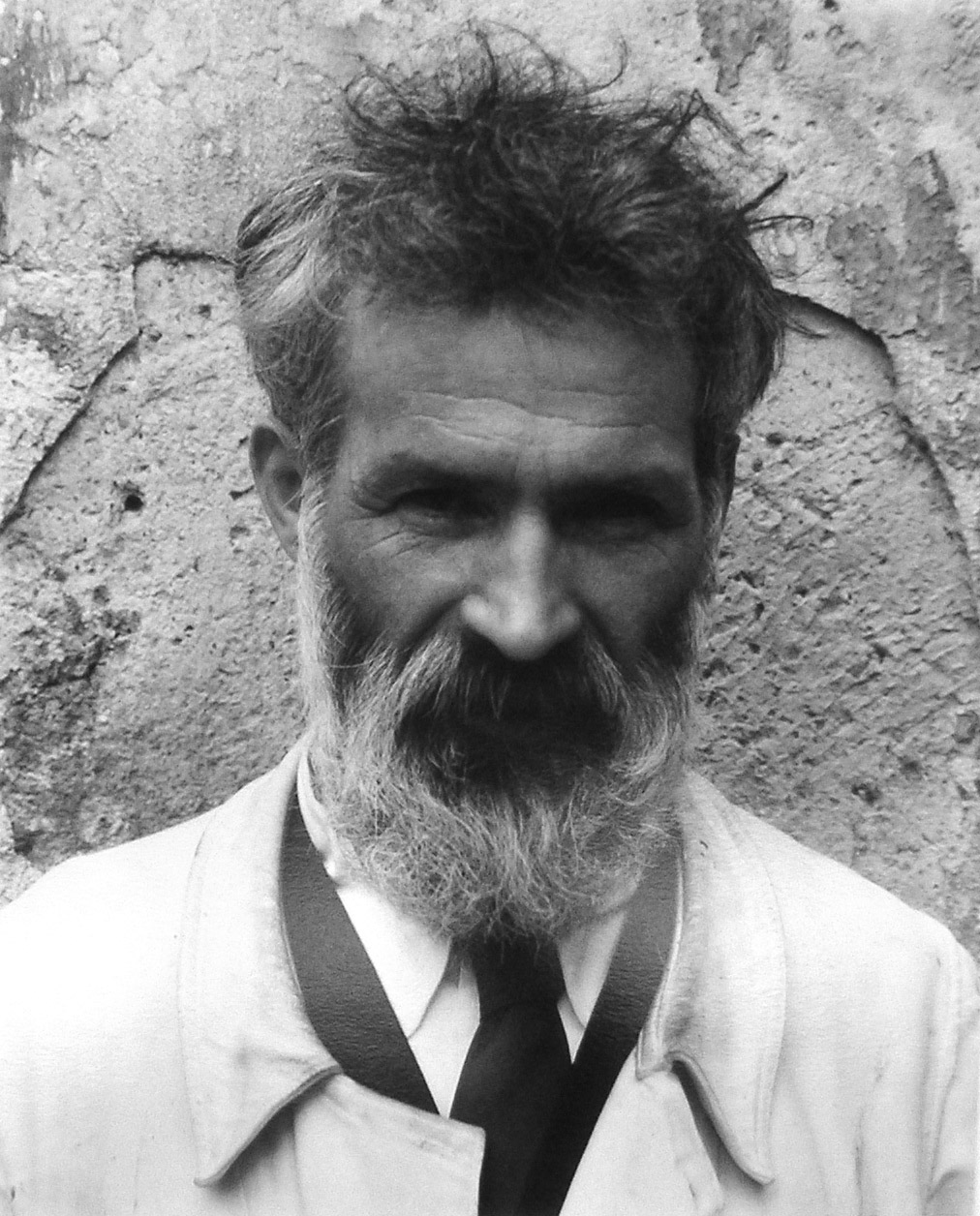

Why Brâncuși belongs on this wiki
This site documents The Family of Man — Edward Steichen’s 1955 photographic exhibition. Brâncuși is here because the friendship between the Romanian sculptor and the Luxembourg-born American photographer is one of the documentary links between Steichen’s interwar Paris years and the curatorial ambition that would, decades later, produce The Family of Man.
The most legally consequential moment in that friendship — Steichen’s 1926 import of one of Brâncuși’s Bird in Space sculptures into New York, the U.S. Customs duty dispute it triggered, and the November 1928 ruling of the U.S. Customs Court that abstract sculpture qualified as “art” under the 1922 Tariff Act — is one of the better-known episodes in the legal history of modernism. Steichen’s role in it is the part this wiki cares about.1
The friendship · Paris and Voulangis
Brâncuși and Steichen were near contemporaries. Brâncuși was born in 1876 in Hobița, Romania, and made his way to Paris in 1904 — the same era in which Steichen was crossing back and forth between New York and France for Stieglitz, the Photo-Secession, and the Condé Nast magazines. Both were immigrants to a country other than their birth — Brâncuși to France, Steichen to the United States — and both are remembered today as founding figures of, respectively, modern sculpture and modern photography.2
Steichen made a series of photographs of Brâncuși and his Paris studio across the 1920s. The most-published of these, the 1925 portrait Brancusi in His Studio, Paris, is the only one of these dates anchored at Tier 2 in this wiki at the time of writing.3
A related set of photographs — Steichen’s images of Brâncuși’s Endless Column installed in Steichen’s own garden at Voulangis, in the French countryside east of Paris — are recorded in Metropolitan Museum holdings (search/687837 in the Met’s catalog) under the title Brancusi’s “Endless Column” in Mr. Steichen’s Garden, Voulangis, France. The Met catalog page returned HTTP 403/429 in the research round of 30 April 2026 and has not been opened directly here; the title and provenance are pointer-only until that record is re-fetched.1
What is clear from the photographic evidence is that Steichen owned at least one Endless Column and installed it as a sculpture in his own garden — i.e., he was both a personal collector of Brâncuși’s work and the photographer who documented its installation at his French house.
Bird in Space and the 1928 customs case
In October 1926 a Bird in Space — one version of Brâncuși’s polished bronze series — arrived in New York harbor on the steamship Paris, alongside nineteen other Brâncuși sculptures destined for U.S. exhibition. U.S. Customs officials refused to classify the polished bronze as art. Under the 1922 Tariff Act, an “original work of a professional sculptor” was duty-free; what officials saw on the dock was, they said, a “manufactured metal object,” subject to a 40% tariff (~US $230 on the declared value).1
Steichen — recorded in some accounts as the buyer of this Bird in Space, in others as the consignee who would take possession after the New York exhibition — filed an appeal of the customs decision in November 1926. The case became Brancusi v. United States. In November 1928, Judges Young and Waite of the U.S. Customs Court ruled in favor of the artist. Justice Waite’s opinion noted a “so-called new school of art, whose exponents attempt to portray abstract ideas rather than imitate natural objects” — a sentence quoted in essentially every secondary account of the case.1
Perspective note. This wiki’s treatment of Brancusi v. United States follows the standard secondary-literature framing in which Steichen is the importer and appellant whose name appears on the case caption. Other readings exist in the wider scholarship: Marcel Duchamp’s role in organising the U.S. shipment and placing Brâncuși’s work with American collectors is treated by some art historians as more central to the New York side of the affair than Steichen’s; later scholarship has also read the case in terms of art-market consolidation and the institutional canonisation of male modernist sculpture, not only as aesthetic vindication. Those readings are not anchored to in-repo Tier-1/2 sources in this round and should be added when consulted.
For the deeper documentary uncertainty — whether Steichen personally took the witness stand at the 1928 trial, or whether his name appears only as the consignee/appellant on the case caption — see the longer treatment on the Steichen page.1
The Endless Column at Târgu Jiu
A decade after the customs case, Brâncuși completed the Coloana Infinitului (Endless Column) at Târgu Jiu, Gorj County, Romania. Inaugurated 27 October 1938, the column rises to a total height of 29.3 metres in stacked rhomboidal modules — fifteen full modules with a half-unit at the base and apex (the Wikipedia article counts the half-units as full when computing total height, and so refers to “16 modules” in that sentence). It is the largest and most public form of the Endless Column idea Brâncuși had been working with for two decades — including the version installed in Steichen’s garden at Voulangis in the 1920s.4
For the image of the monument as it stands today, see the Wikimedia Commons page RO_GJ_Tg_Jiu_park_featuring_Endless_Column.jpg (photograph by Cristian-Mihail Miehs, 31 August 2012; photographer’s CC0 release combined with Romania’s freedom of panorama for permanent outdoor works). The Brâncuşi sculpture itself remains under European copyright until the end of 2027 (life+70 from the artist’s 1957 death) and the United States provides no statutory freedom-of-panorama exception for sculpture, so this wiki does not host the image directly — see
IMAGE_POLICY.md.

The Târgu Jiu column is the public, monumental form of the same sculptural idea Steichen had owned and photographed in his own French garden a decade earlier. The Voulangis installation predates the Târgu Jiu monument; the timing relationship between the smaller garden version Steichen owned and the public Romanian monument has not been re-verified against a Tier-1 Brâncuși catalog raisonné in this round and should not be treated as established here.
A cautious note on attribution
Because Brâncuși and Steichen were near contemporaries — Brâncuși 1876–1957, Steichen 1879–1973 — and because most of the documentary record of their friendship sits in catalogue pages held by major museums (MoMA, the Metropolitan Museum, the Centre Pompidou) whose direct catalog pages have returned HTTP 403/429 to our research-round fetches, the dates and titles given on this page are anchored at varying levels of confidence:
- Tier 2 (Aperture Foundation product page, fetched 2026-04-30): Steichen’s 1925 portrait Brancusi in His Studio, Paris.3
- Pointer / Tier 3 (Wikipedia raw text fetched 2026-04-30, Bellevue College court-extract page fetched 2026-04-30): the 1922 portrait date; the 1920 studio photograph date; the Endless Column at Voulangis Met holding; the MoMA Constantin Brancusi in his Studio, 1927 holding; the entire 1926-1928 Brancusi v. United States timeline.1
- Image-side anchoring: the 1922 Steichen portrait reproduced at the top of this page is held in the Wikimedia Commons collection under a public-domain claim (PD-US-expired, first published in the United States); the metadata on the Commons file page has been re-verified this round.
When the museum catalog pages cited in pointer notes can be opened directly, the relevant claims should be promoted from Tier-3 pointer to Tier-1 / Tier-2 attestation.
Further reading
- The full Brâncuši-customs-case narrative on the Steichen page: Brancusi, the studio, and the 1928 customs case.
- Working research note for the Brâncuši-Steichen relationship:
research/steichen-brancusi.md. - Aperture Foundation, Brancusi in His Studio, Paris, 1925 —
src-aperture-prints-brancusi-1925.
-
Steichen-Brâncuši material: this page draws on three pointer sources, all fetched 2026-04-30: the Wikipedia article Constantin Brâncuși (“in 1926 … photographer Edward Steichen purchased it [a Bird in Space] and shipped it to the United States”; “Photograph by Edward Steichen, 1922”; “Brâncuši’s Paris studio, 1920, photograph by Edward Steichen”); the Wikipedia article Bird in Space (October 1926 arrival on the steamship Paris alongside 19 other Brâncuši sculptures; 40% tariff; Steichen “filed an appeal to the U.S. Customs’ decision to reclaim the money”; November 1928 ruling by Judges Young and Waite; the operative line from Justice Waite’s opinion); and the Bellevue College reproduction of court-extract material (
bellevuecollege.edu/artshum/.../BrancusiCourtCase.htm), which contains Jacob Epstein’s deposition and Justice Waite’s judgment but does not show Steichen testifying. The Met Museum object records for Brancusi’s Studio (search/266850) and for Brancusi’s “Endless Column” in Mr. Steichen’s Garden, Voulangis, France (search/687837), and the MoMA collection record for Constantin Brancusi in his Studio. 1927 (collection 48872), are attested by a 2026-04-30 Google search ofmetmuseum.organdmoma.orgbut their canonical catalog pages returned HTTP 403/429 in this round and have not been read directly. The conventional reporter citation form for the 1928 U.S. Customs Court decision (commonly given in the secondary literature as “T.D. 43063, 54 Treas. Dec. 428”) has not been fetched or verified in this round and should be confirmed against an actual court reporter before being treated as authoritative — the upgrade path is inresearch/steichen-brancusi.md. PerCREDIBILITY.mdWikipedia is a pointer source, not an authority. ↩ ↩2 ↩3 ↩4 ↩5 ↩6 -
Brâncuși biographical dates (1876 birth, 1957 death, Hobița origin, 1904 arrival in Paris) are widely repeated in standard biographical references and were surfaced from the Wikipedia article Constantin Brâncuși fetched 2026-04-30. They are not independently anchored to a Tier-1 monograph in this round; per
CREDIBILITY.mdWikipedia is pointer-only. ↩ -
Aperture Foundation, Edward Steichen: Brancusi in his studio, Paris, 1925 —
src-aperture-prints-brancusi-1925. Anchors the title and the 1925 dating of one of Steichen’s photographs of Brâncuši in his Paris studio. The framing of Brâncuši as “one of the founding figures of modern sculpture” and Steichen as “one of the founding figures of photography” is institutional / promotional language reproduced verbatim from the Aperture page (fetched 2026-04-30). ↩ ↩2 -
Endless Column at Târgu Jiu: dates and dimensions surfaced from the Wikipedia article Endless Column fetched 2026-05-02. The Wikipedia text contains an internal inconsistency on the module count — one sentence reads “stacks 15 rhomboidal modules, with a half-unit at the top and bottom, making a total of 16,” while the height-computation sentence reads “All 16 rhomboidal modules accumulate a total height of 29.3 m.” The page-body framing above (15 full modules + 2 half-units; Wikipedia counts 16 when computing height) preserves the source’s own ambiguity rather than asserting one number as canonical. The 27 October 1938 inauguration date and the 29.3-metre total height are stable across both Wikipedia sentences. Per
CREDIBILITY.mdWikipedia is pointer-only; these claims should be promoted to Tier 2 against a Brâncuši catalogue raisonné or the official Constantin Brâncuši Centre at Târgu Jiu’s institutional documentation when one can be opened directly. The relationship between this 1938 monumental work and the smaller Endless Column Steichen had installed in his Voulangis garden in the 1920s is editorial framing not anchored to any Tier-1 monograph in this round. ↩